Project Team: Brighetti Caterina, Manni Giorgia, Provveduto Caterina, Rubino Domenico, Seghi Lorenzo, Tartarelli Pamela.
Location: Sant'Orsola Hospital, Bologna (IT)
Year: february - june 2024
The project was awarded the Giacomo Venturi Prize for Urban Regeneration in the Student category (December 2024).

The underlying idea is to create an area that responds to the needs of those who regularly visit the hospital—such as patients, healthcare staff, and visitors—as well as those who live nearby or pass through the area occasionally. This transformation process is not only a functional improvement but also a valuable opportunity to strengthen the relationship between the hospital and the local community, thus promoting a sense of belonging and social inclusion.
The main goal is to promote greater inclusivity by making the area more accessible to everyone and adopting innovative solutions focused on environmental and social sustainability. These improvements can also positively impact the quality of life for citizens, helping to create an environment in which everyone feels welcomed and valued. This ambitious vision is implemented through a series of targeted interventions designed to address various existing issues, ensuring that every aspect of the project meets the needs and expectations of the community. The redevelopment does not concern only physical structures, but also the creation of a stronger social network, with the aim of strengthening the bond between people and the hospital.
The project is inspired by the seventeen Sustainable Development Goals (SDGs) defined by the United Nations, which provide a long-term strategic roadmap for achieving a fairer and more sustainable future for all people and communities worldwide. In particular, SDG 11, which focuses on making cities and human settlements inclusive, safe, resilient, and sustainable, served as a fundamental point of reference throughout the development of the project. This goal—essential for urban well-being and quality of life—influenced design choices at every stage, guiding the redevelopment towards solutions that ensure, among other things, universal access to efficient and sustainable transport systems, as well as inclusive use of public spaces.
Special attention was also paid to road safety and improving public transport, with particular focus on vulnerable groups, such as pregnant women, children, the elderly, and people with disabilities, to ensure a hospital environment that is welcoming to all and can meet the needs of every user. It is essential that the project addresses existing problems through an equity-based approach, ensuring that everyone can access services and spaces easily and comfortably.
Analysis Phase and Design Methodology
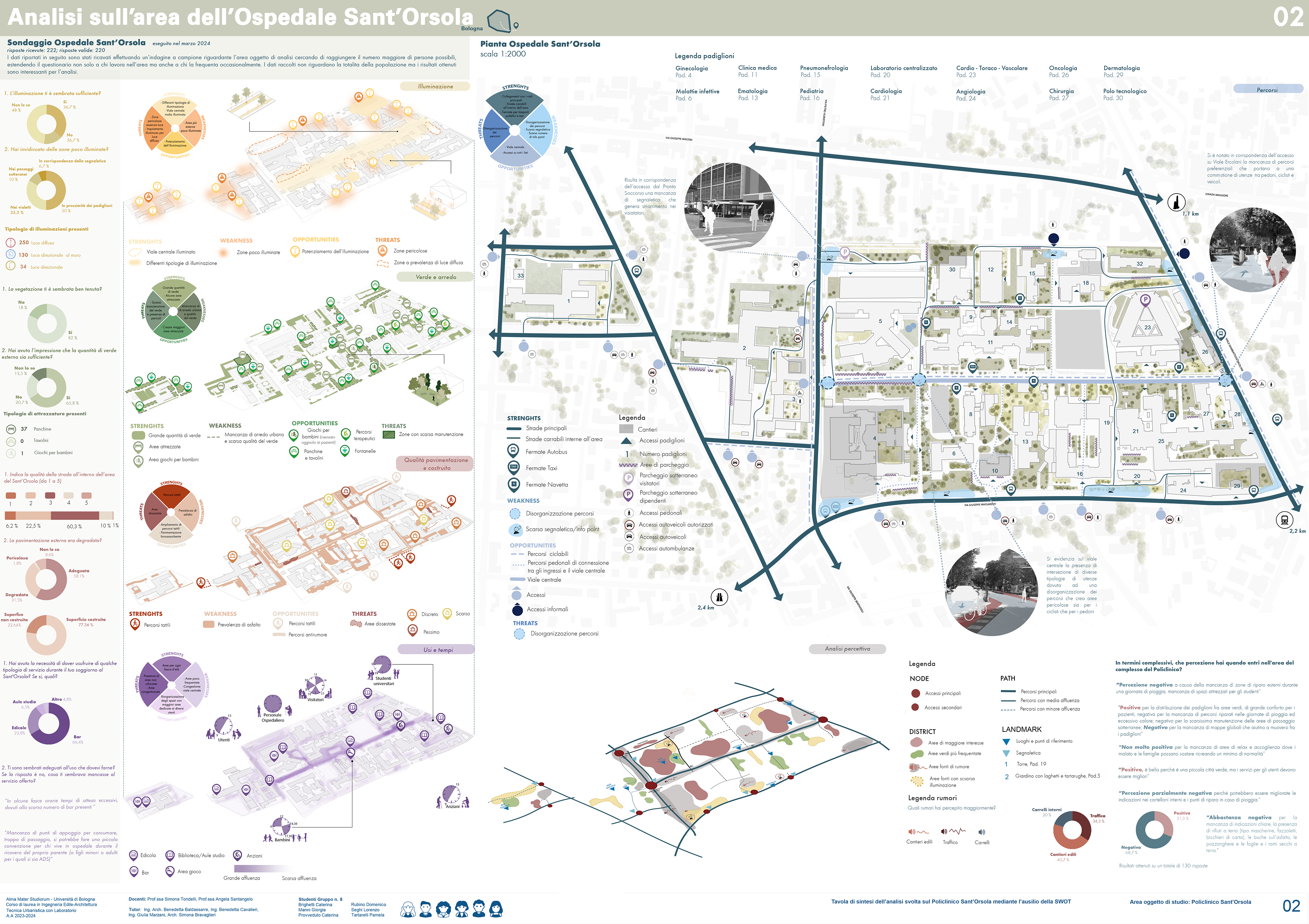
The design phase was preceded by an in-depth analysis of the area, aimed at identifying the main issues and potential of the context. This analysis was carried out through the creation of thematic maps—useful tools that allowed for the investigation of multiple aspects, starting from a general overview down to specific details.
In particular, the historical evolution and function of the various buildings within the complex were examined, along with their roles in the area and their state of conservation. The analysis of both external and internal paths—and their usability and accessibility—was also crucial, as these proved to be highly complex due to the intersection of different types of users. At a more detailed level, attention was given to elements such as the types of paving materials, their state of conservation, and the number of facilities available in the outdoor spaces.
This meticulous investigation provided a solid foundation for understanding the dynamics of the area and represented a fundamental step toward the next design phase, which aims to develop effective solutions to address the issues identified and enhance the area’s strengths.
The analysis enabled a deep understanding of the site, allowing for the development of a project capable of tackling the most problematic aspects and proposing targeted solutions to improve the quality of the spaces for all users.
The analysis enabled a deep understanding of the site, allowing for the development of a project capable of tackling the most problematic aspects and proposing targeted solutions to improve the quality of the spaces for all users.
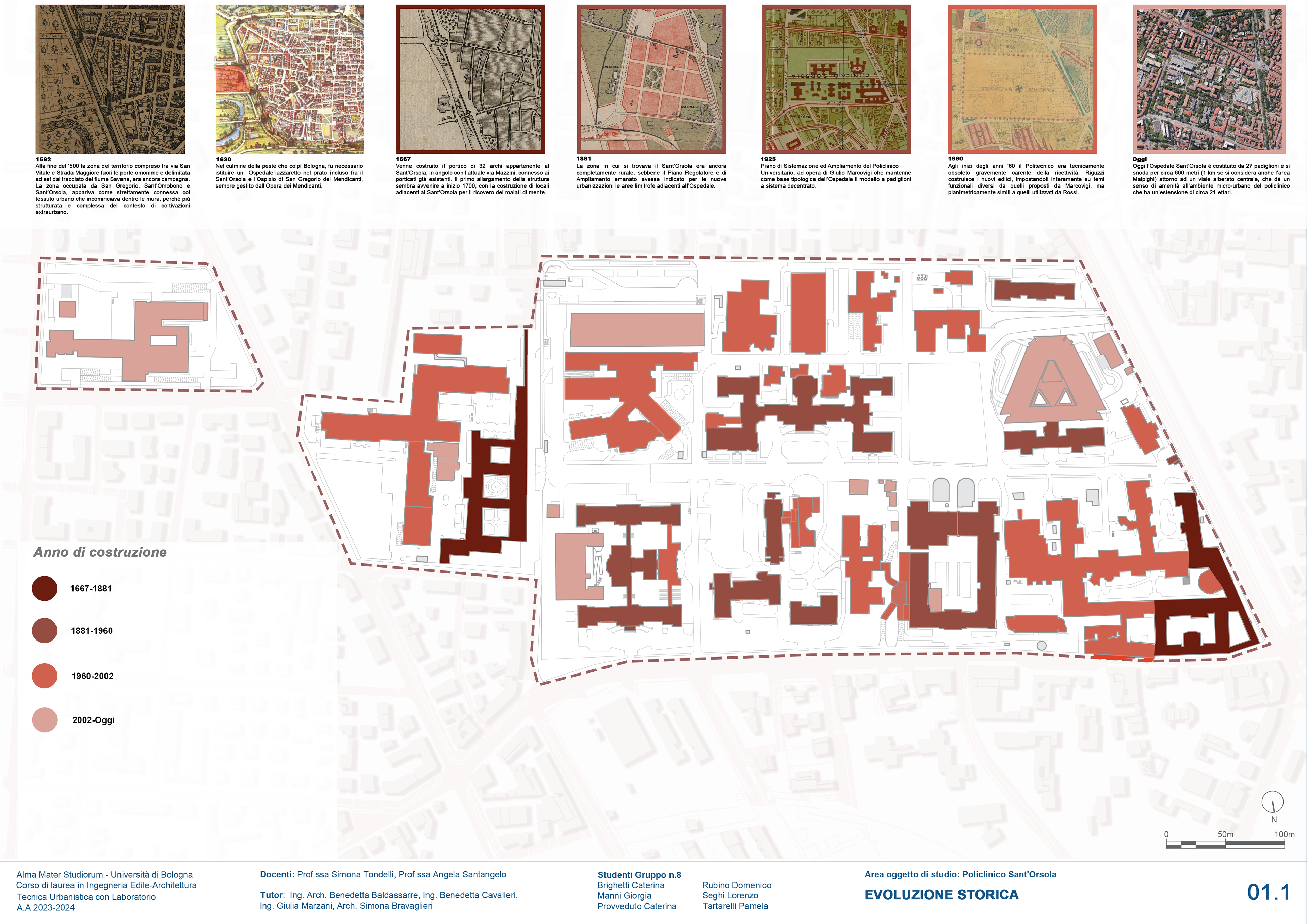
Historic evolution analysis
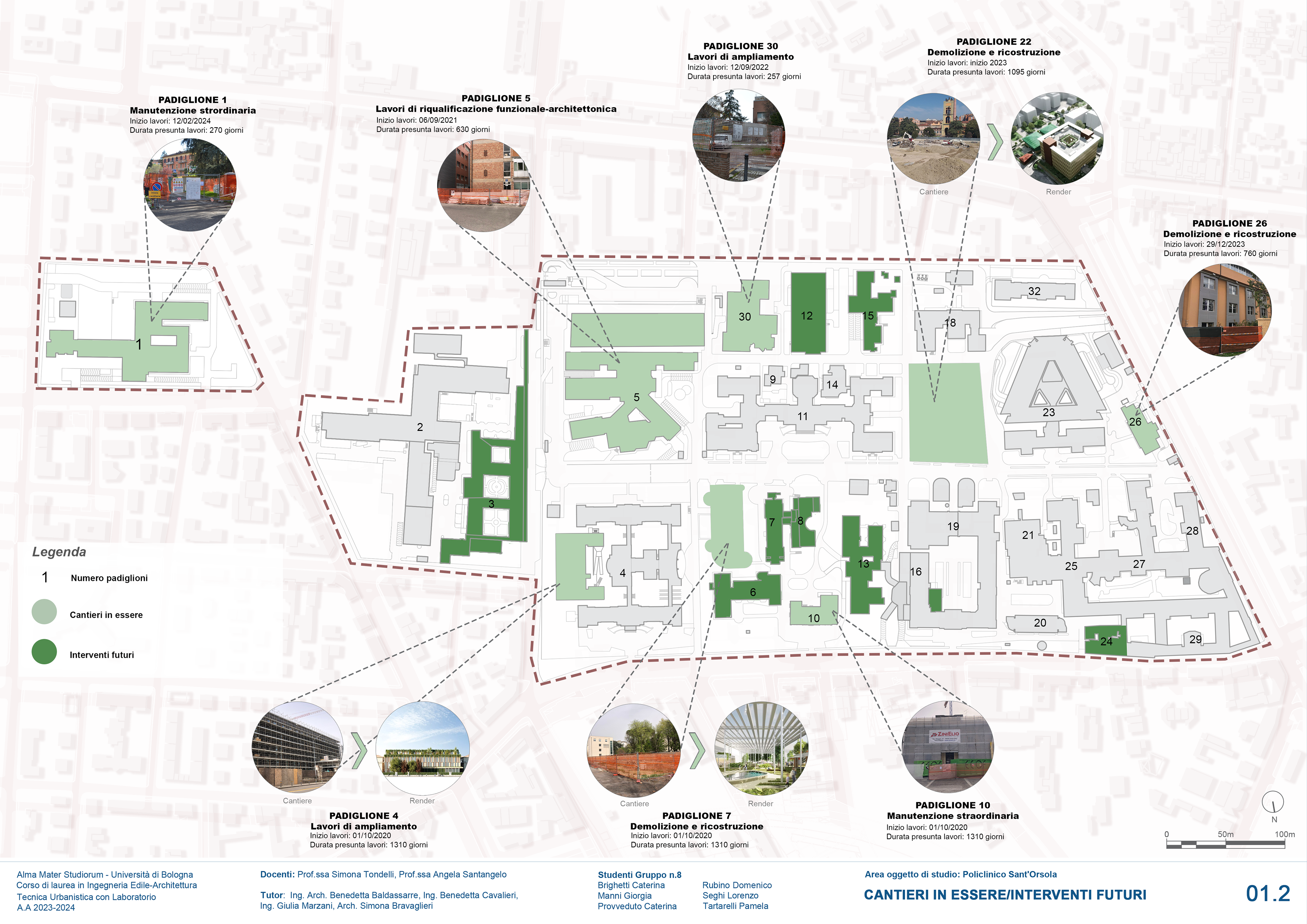
Future construction sites and works in progress
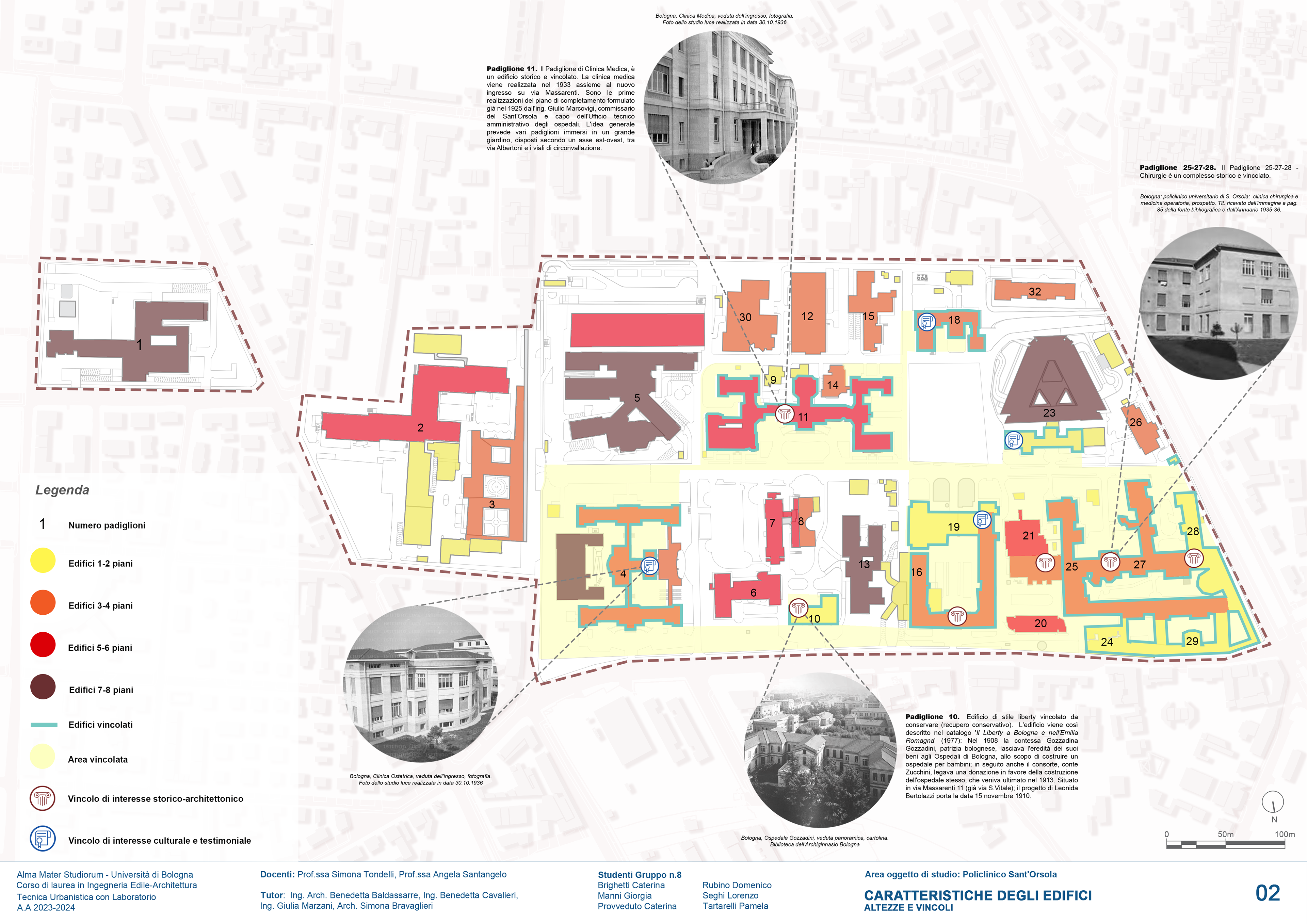
Characterization of the buildings
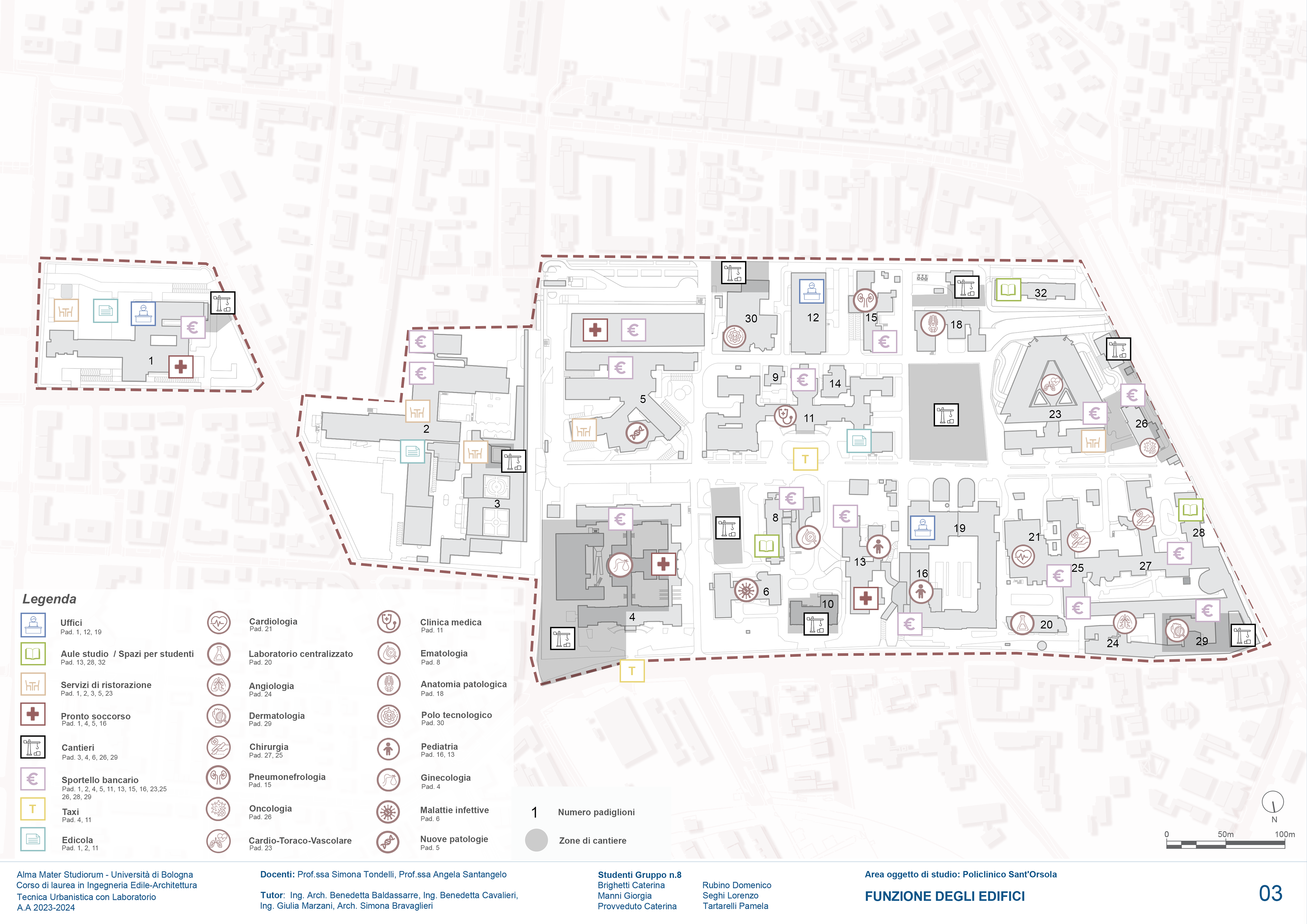
Hospital Halls
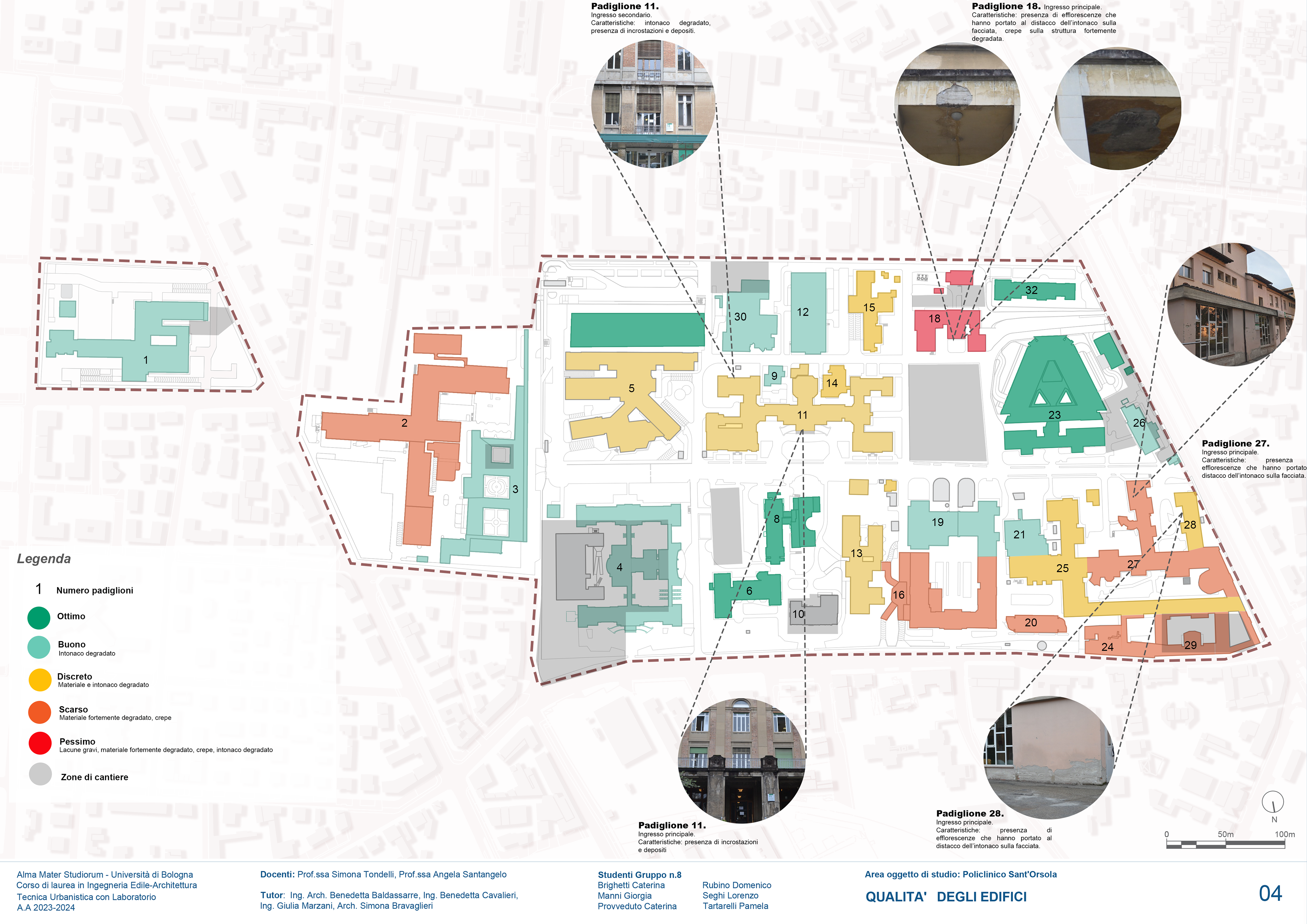
Quality of the buildings
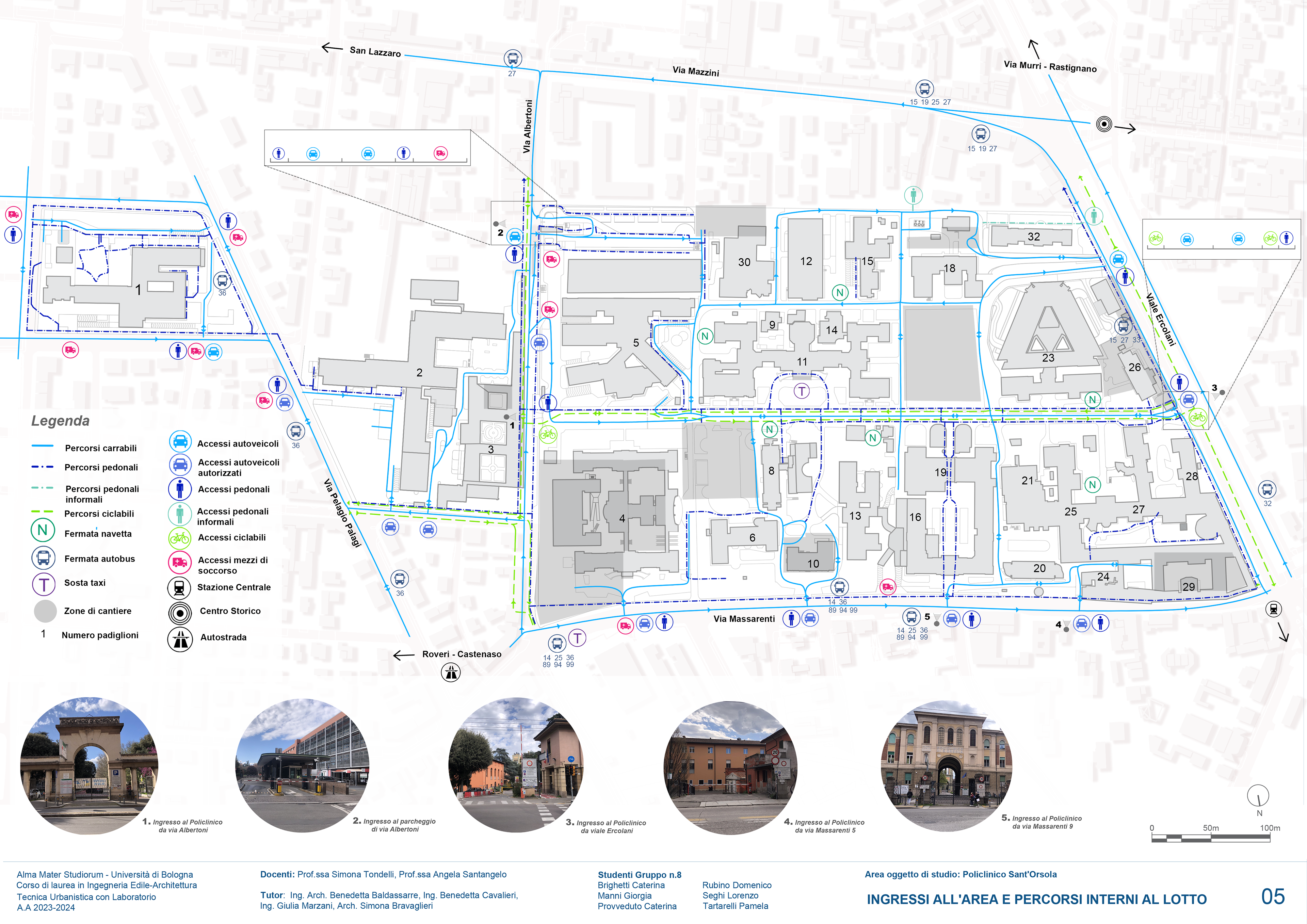
Mobility analysis
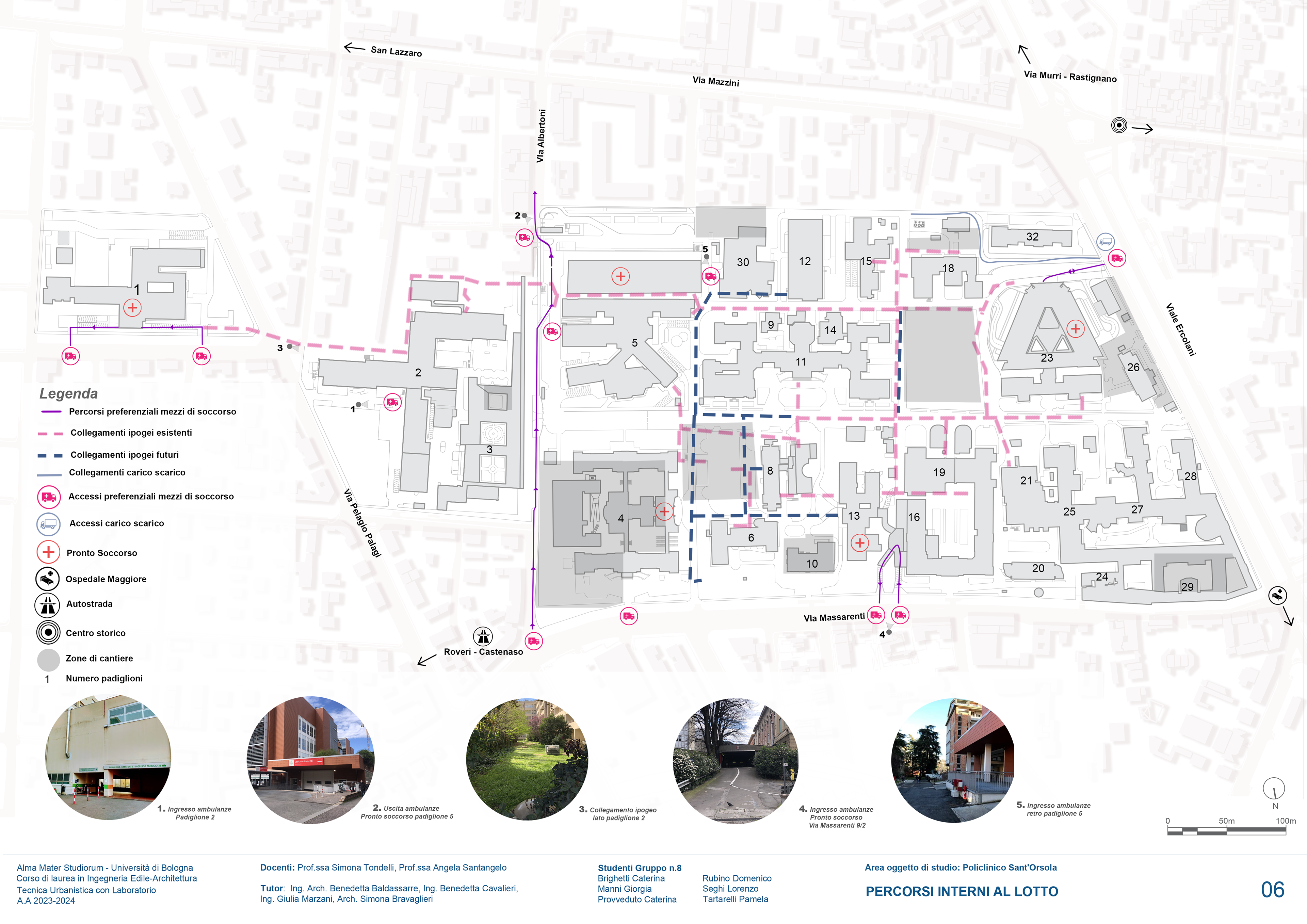
Ambulance mobility analysis
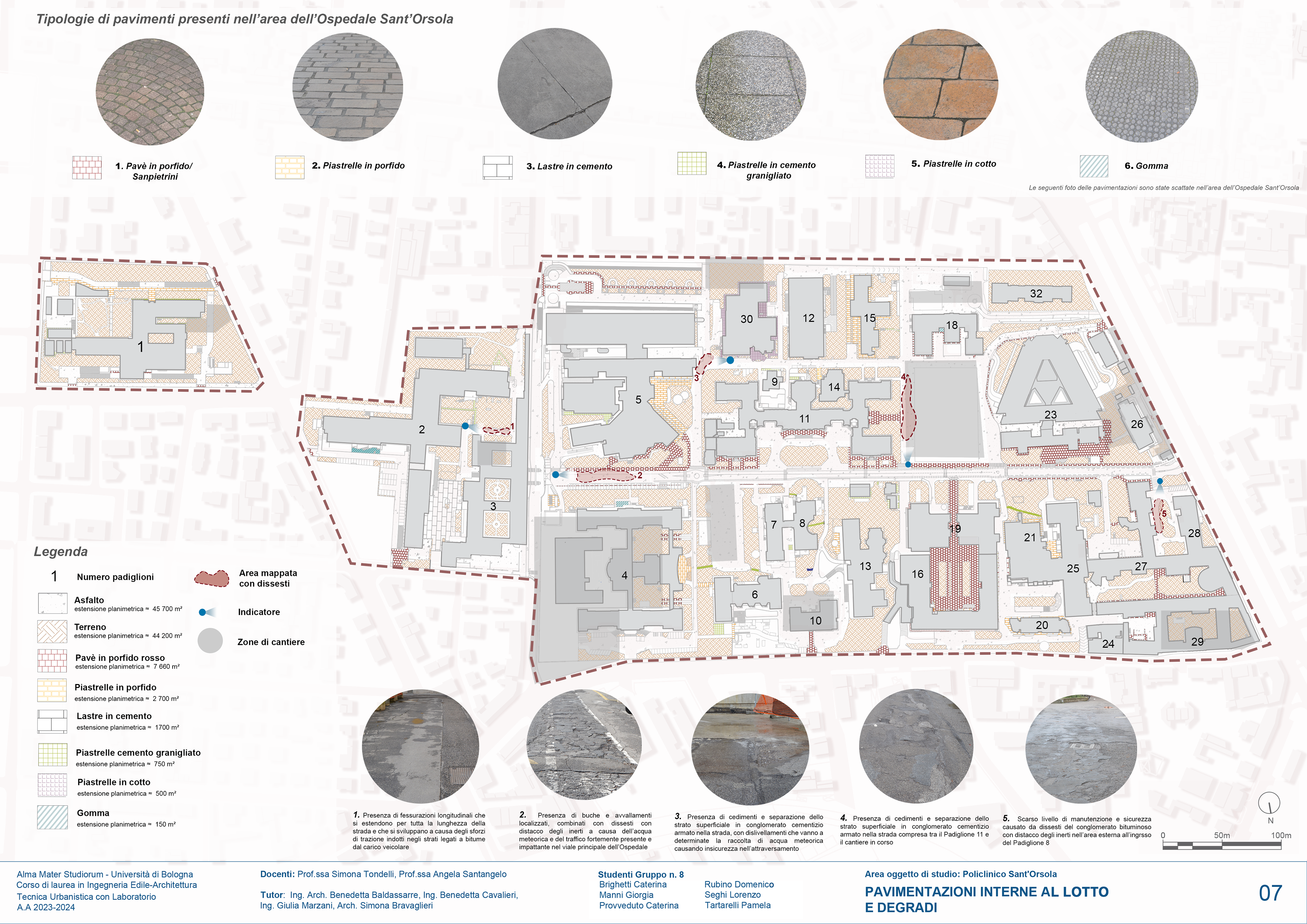
Pavement analysis
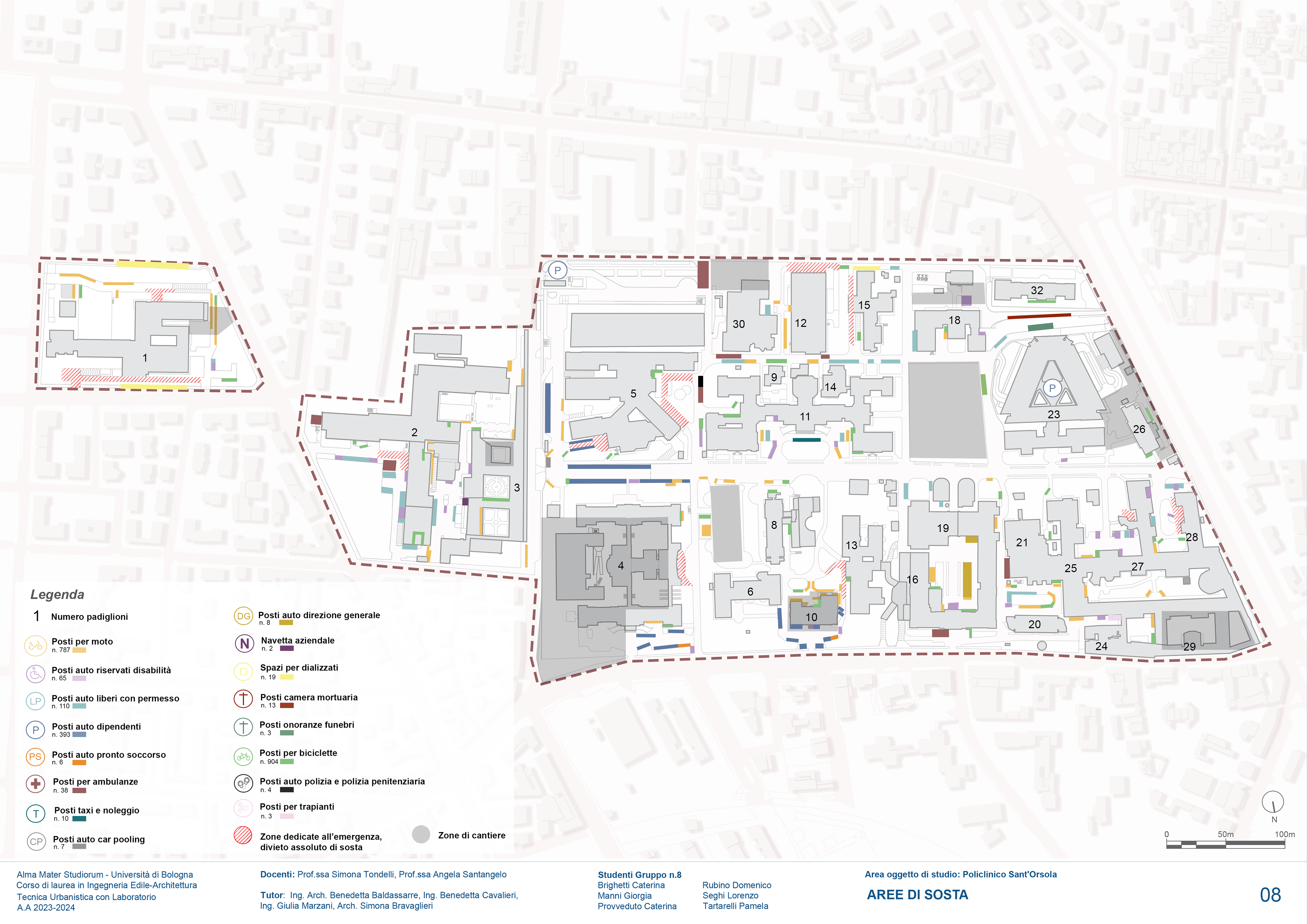
Parking areas
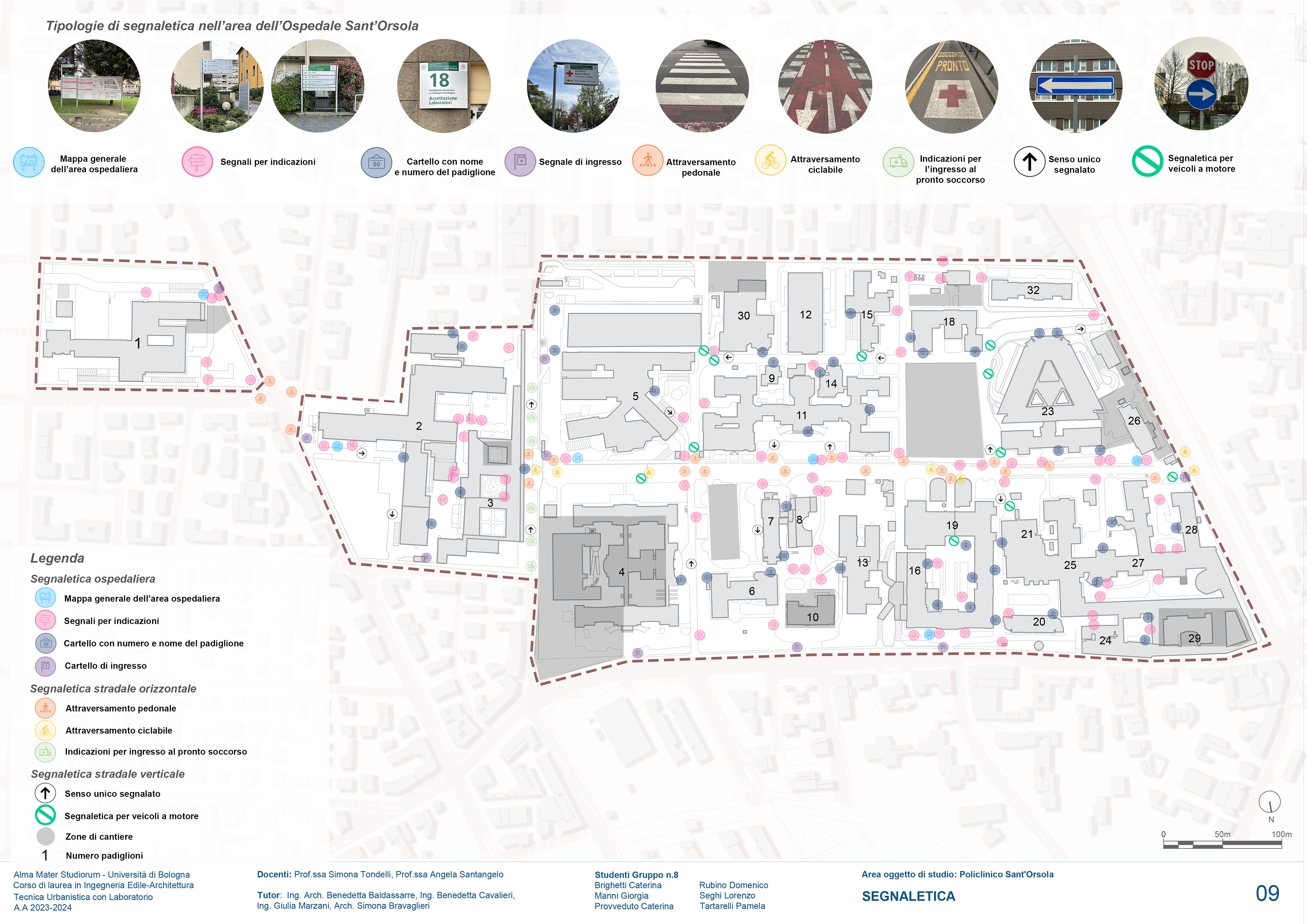
Signage analysis
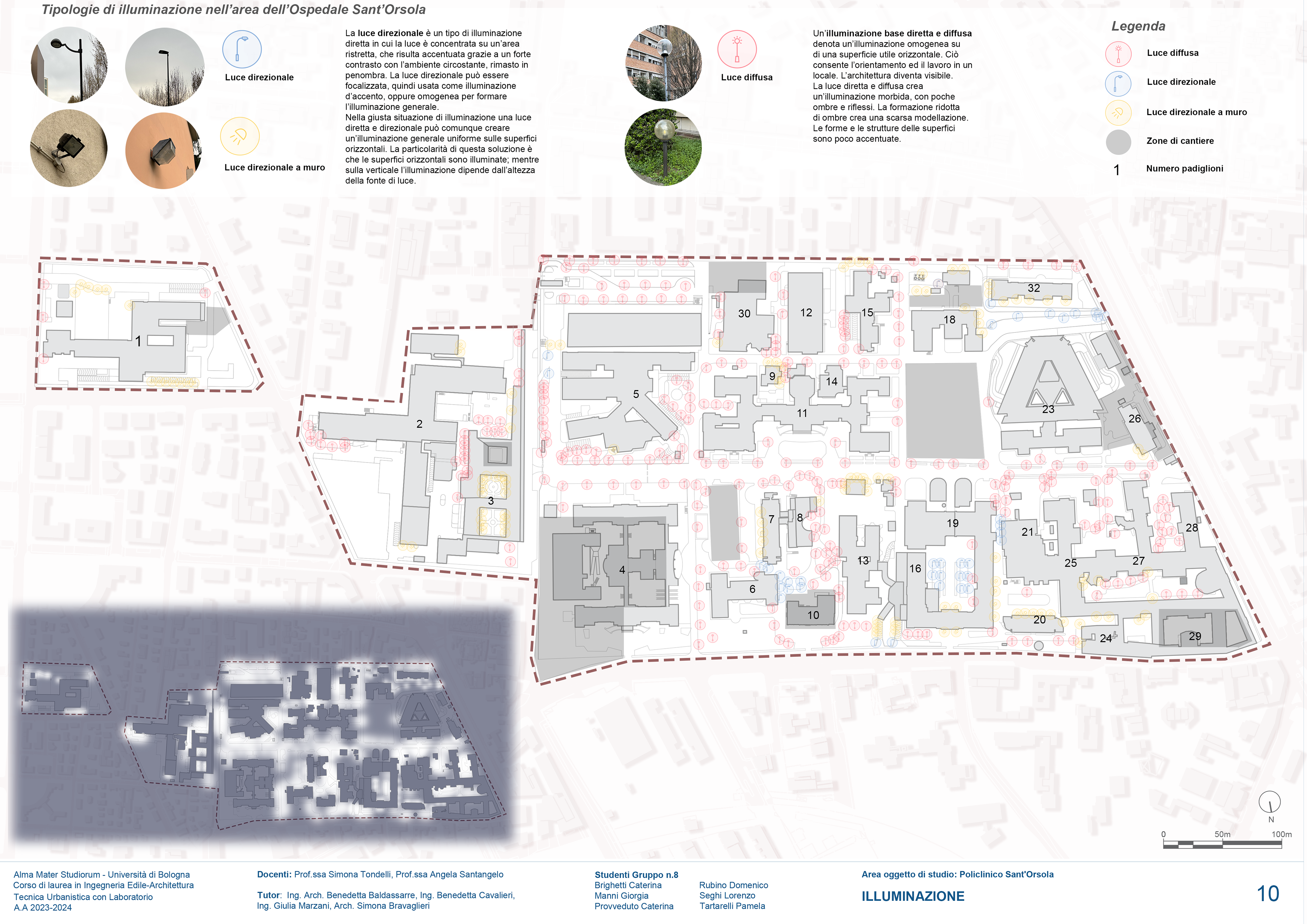
Illumination analysis
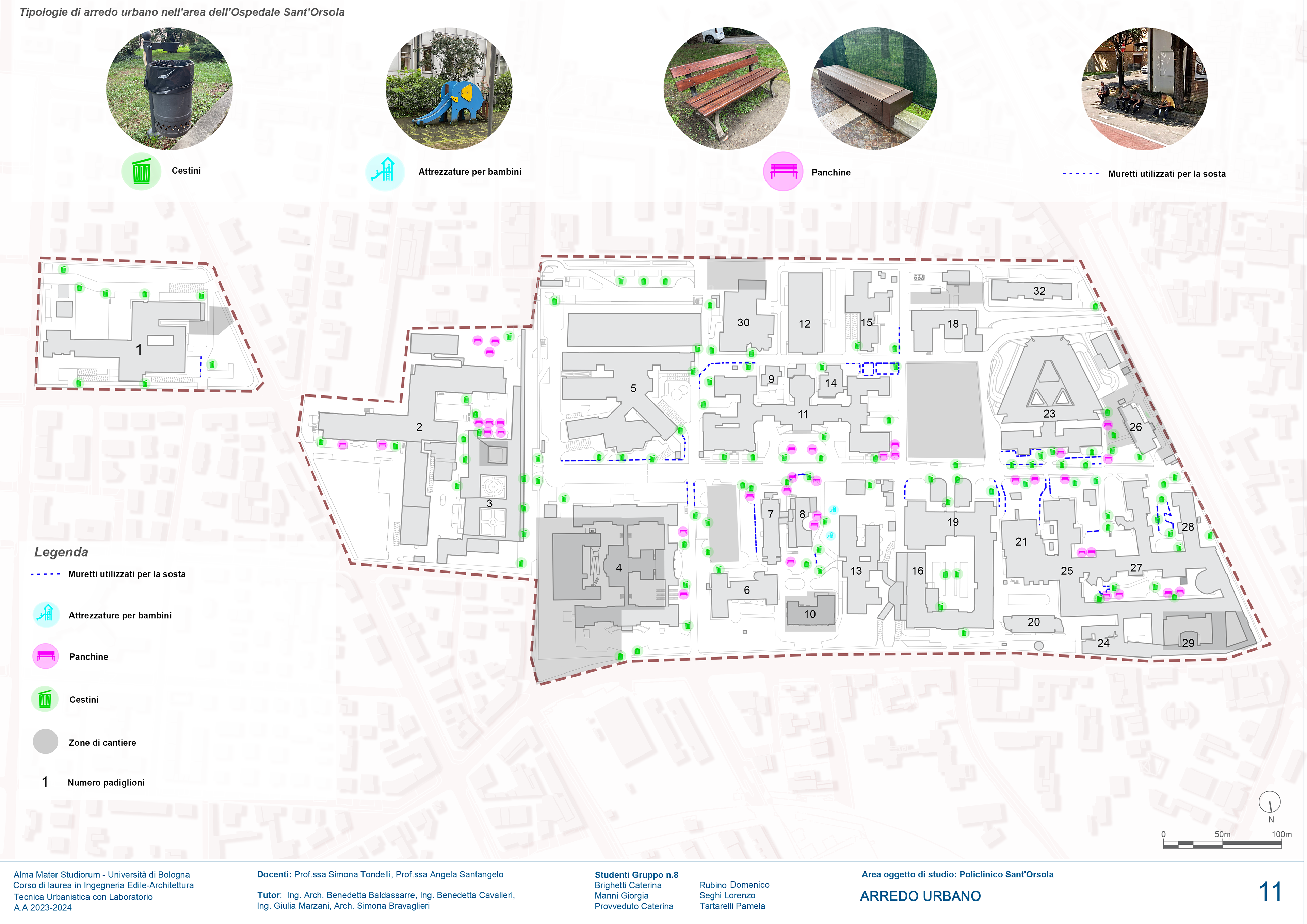
Urban furniture analysis
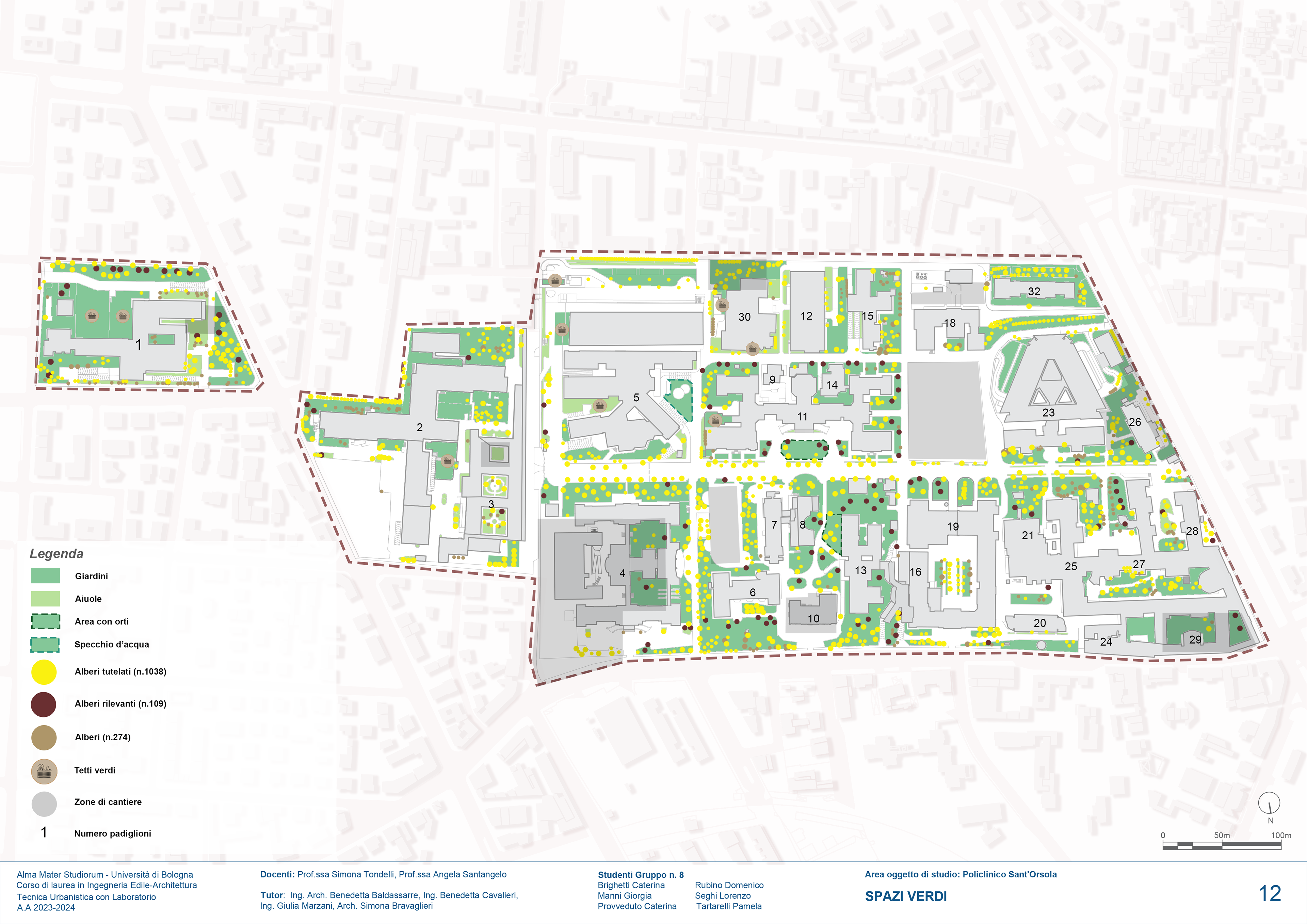
Green spaces analysis
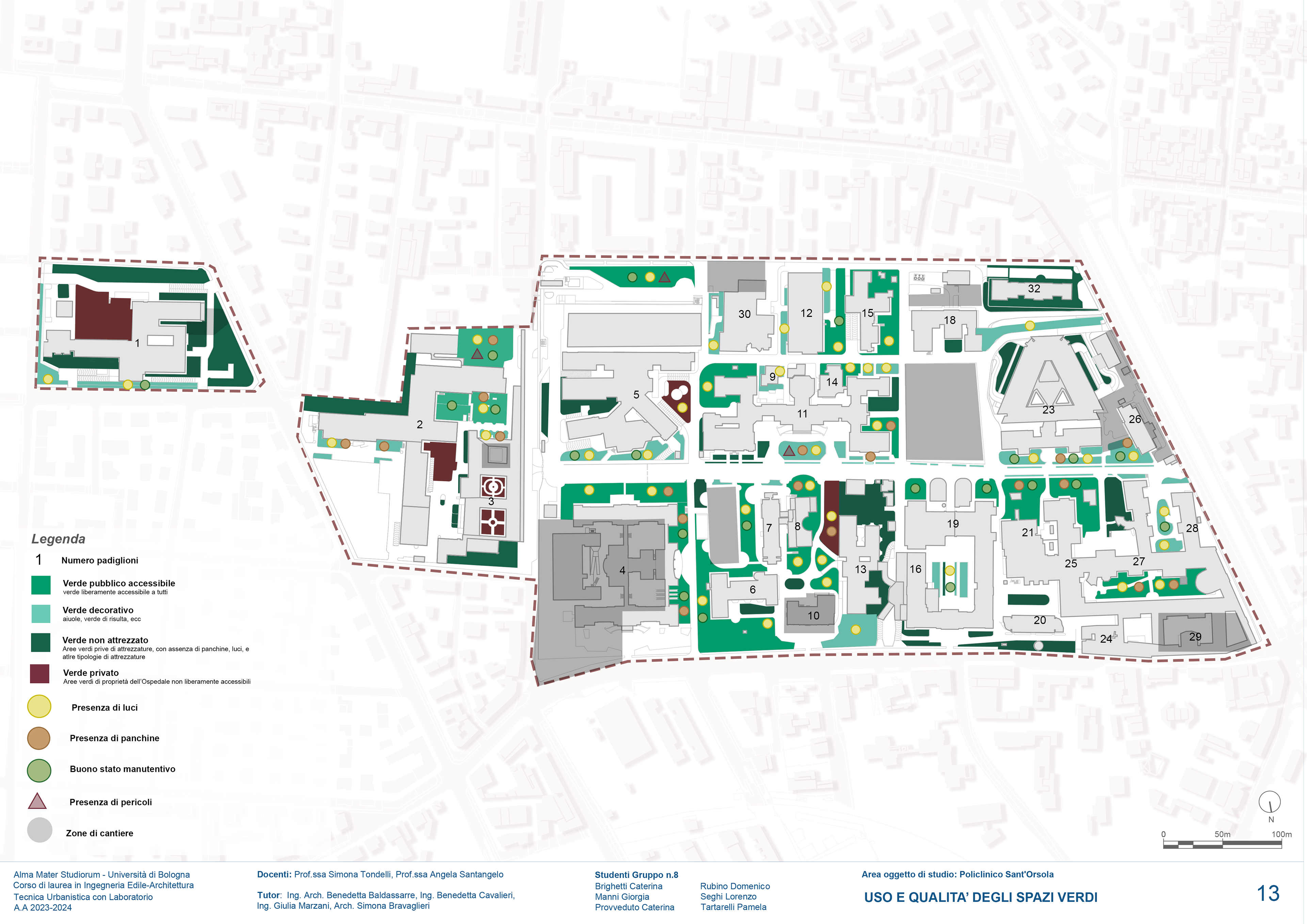
Quality of the green spaces
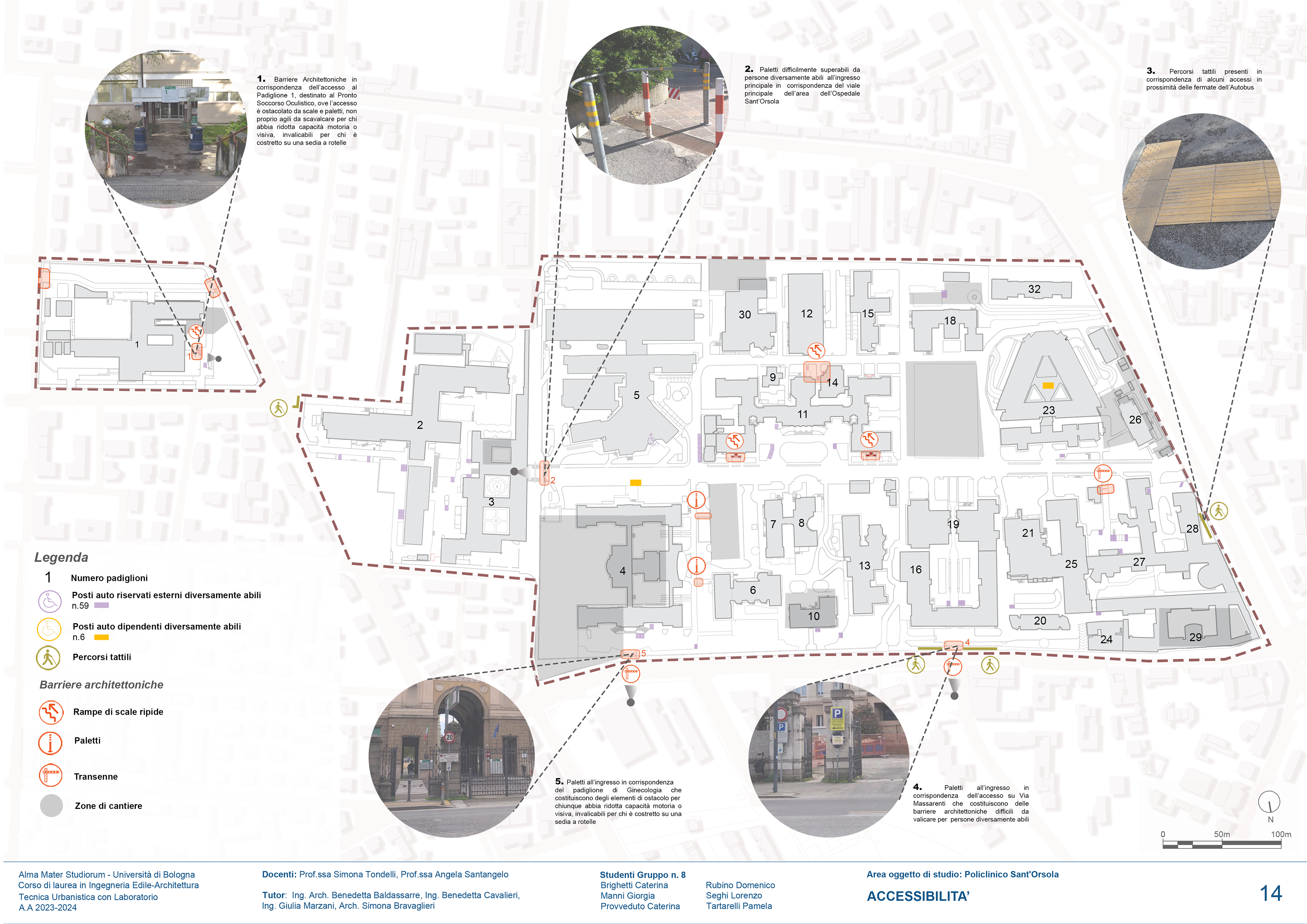
Accessibility analysis
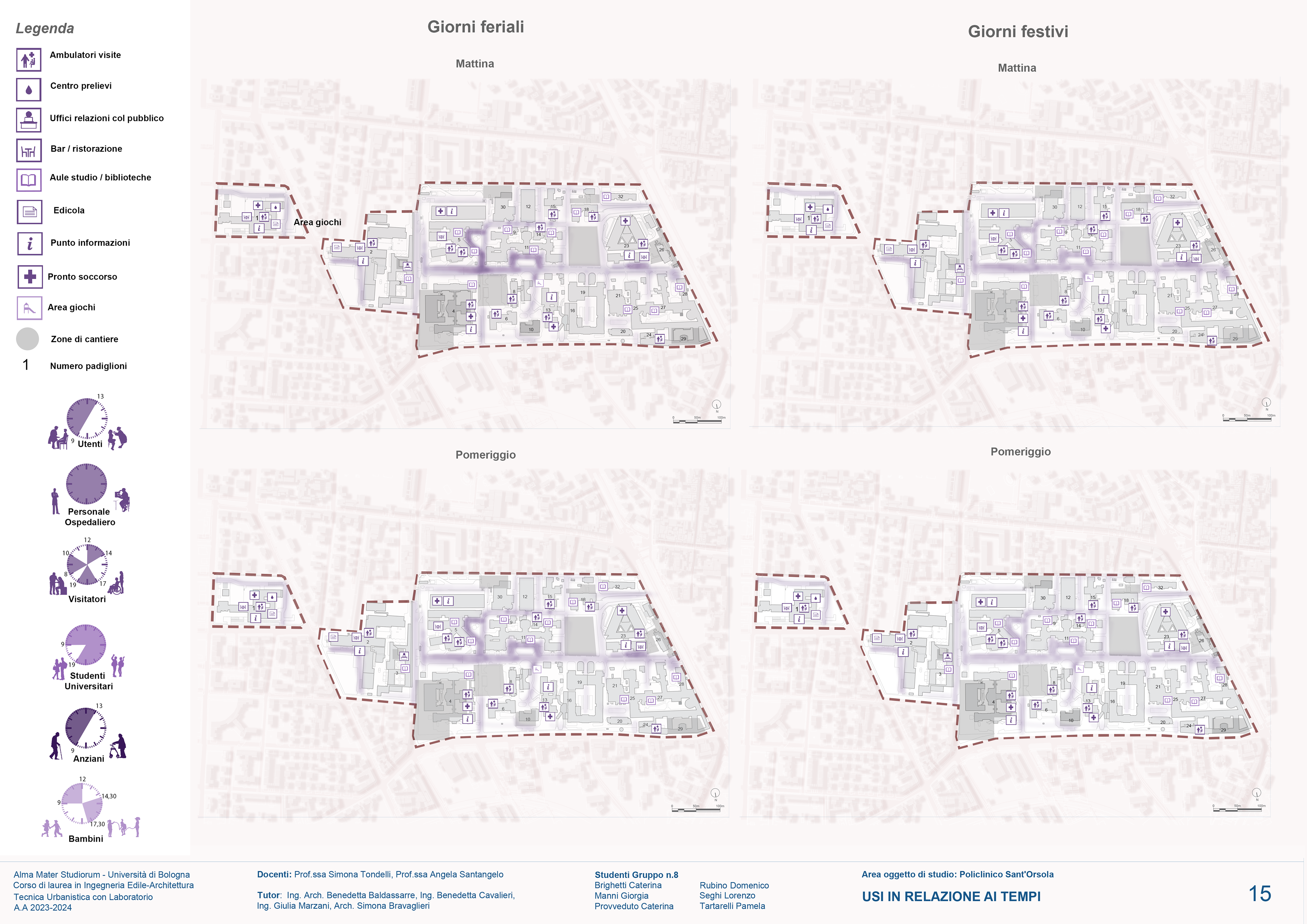
Uses in relation to time
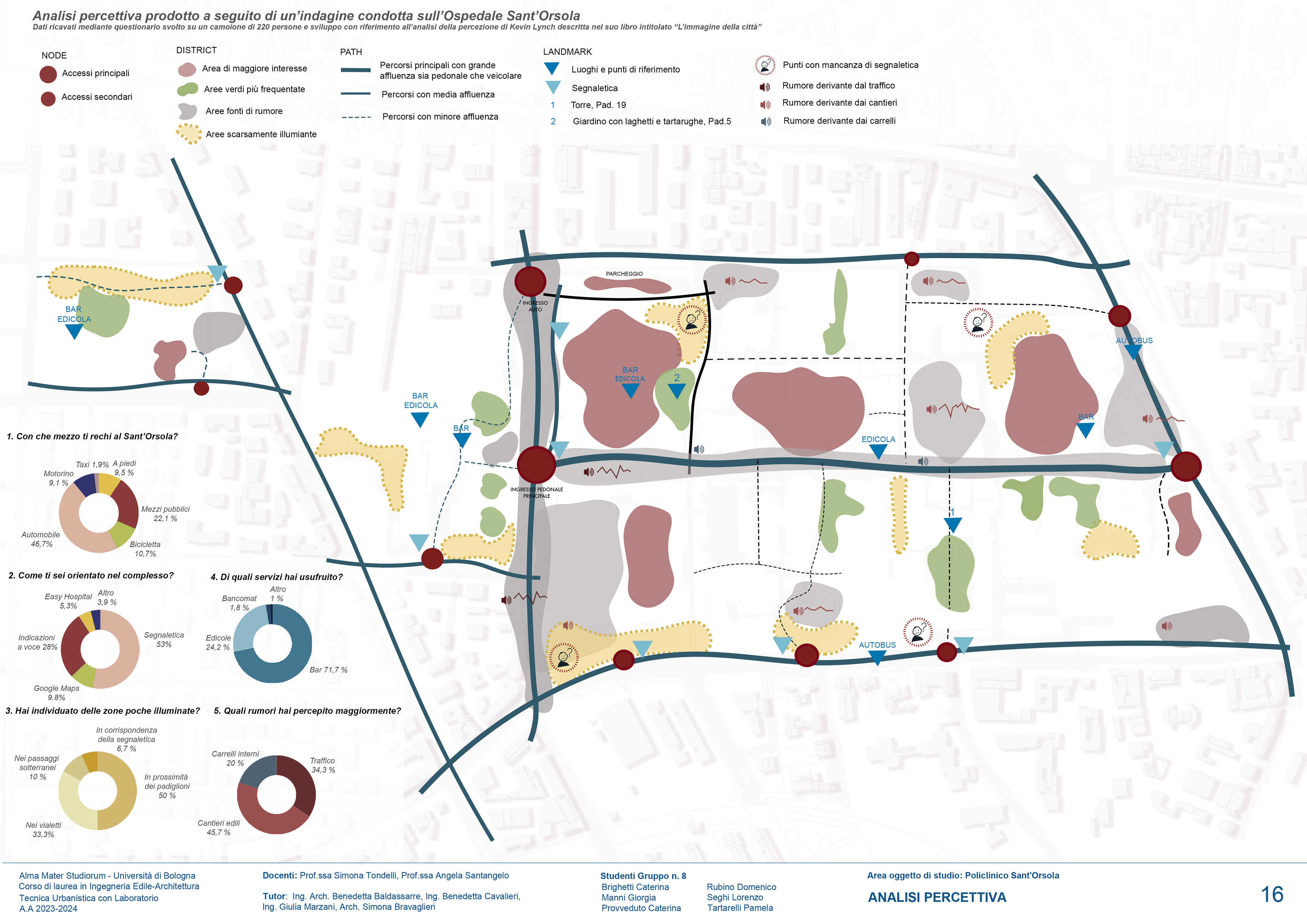
Perceptive analysis
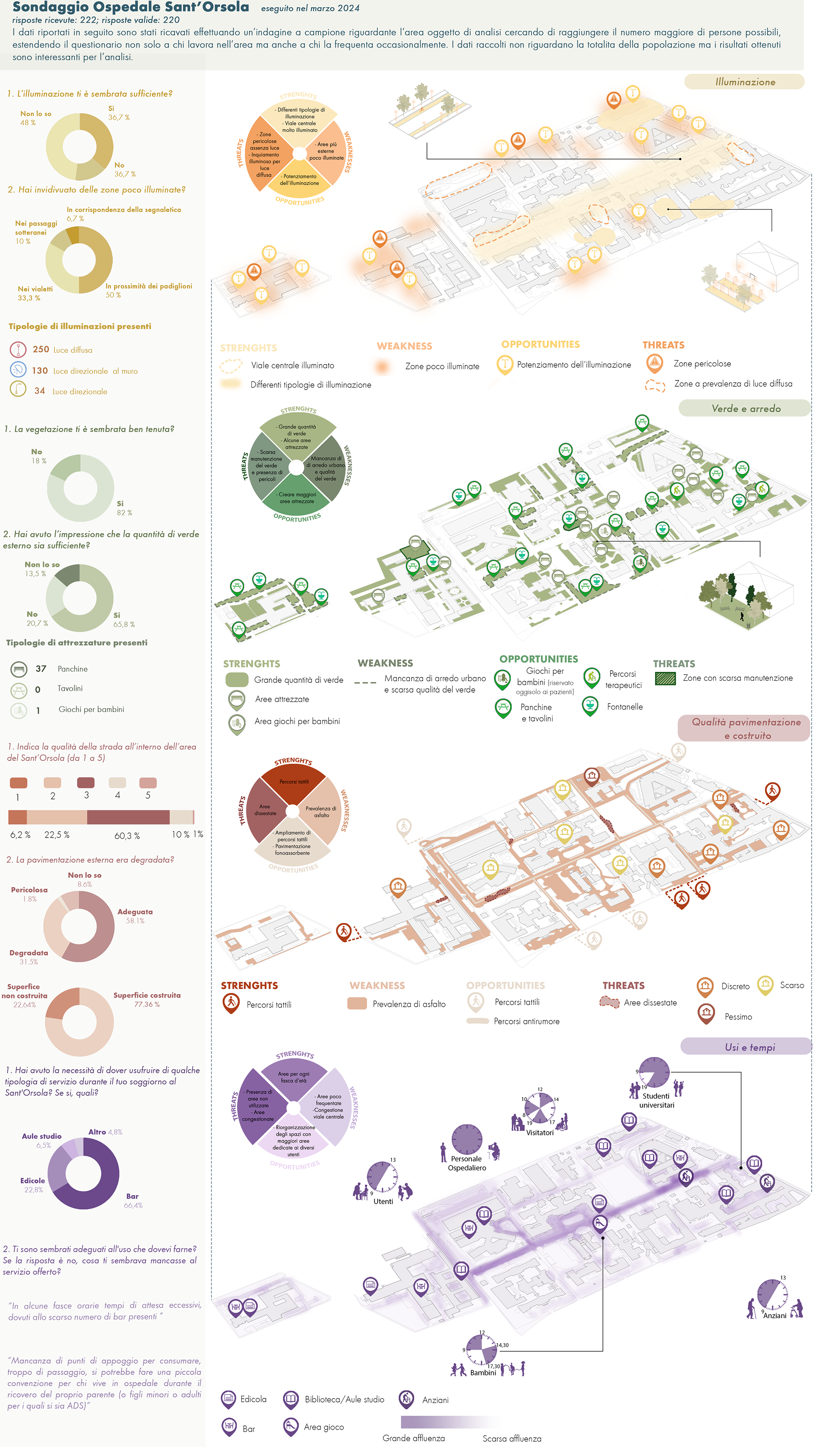
SWOT analysis
To gain a comprehensive overview of the situation, a SWOT analysis (Strengths, Weaknesses, Opportunities, and Threats) was used. This methodology provided a clear overview of the conditions of the area, evaluating crucial aspects such as public lighting, green space management, internal and external mobility, and the state of conservation of existing buildings.
In addition to this technical analysis, a questionnaire was distributed to Bologna residents and regular visitors to the hospital, with the aim of collecting data on users' perceptions. The responses to the questionnaire were fundamental in understanding which aspects of the area were perceived as problematic and therefore required targeted intervention.
At the same time, strengths were identified that deserved further enhancement, with the goal of making the hospital a more welcoming and functional place for everyone.
The analysis revealed, for example, that although there are large green areas, these are poorly equipped and underutilized, making the user experience less pleasant and functional compared to the potential of the area.
Improving green spaces is therefore one of the project’s priorities, as the presence of well-maintained natural environments contributes not only to the aesthetics of the area but also to the psychological and physical well-being of users.
Thus, the importance of providing well-equipped and accessible green spaces was highlighted—places where people can relax and socialize, creating a more livable and welcoming atmosphere.
The analysis revealed, for example, that although there are large green areas, these are poorly equipped and underutilized, making the user experience less pleasant and functional compared to the potential of the area.
Improving green spaces is therefore one of the project’s priorities, as the presence of well-maintained natural environments contributes not only to the aesthetics of the area but also to the psychological and physical well-being of users.
Thus, the importance of providing well-equipped and accessible green spaces was highlighted—places where people can relax and socialize, creating a more livable and welcoming atmosphere.
Another critical issue is related to mobility. One positive aspect is that the central boulevard acts as a connecting element between side entrances, facilitating user flow and serving as a reference point within the area.
However, as a direct consequence of this centrality, the boulevard is often congested, while secondary routes are underused.
Additionally, a significant weakness—also seen as a potential threat—was identified: paths are disorganized and lack adequate signage.
This shortcoming creates a high risk to user safety, particularly for vulnerable groups such as pedestrians and cyclists, who may be exposed to dangerous situations due to the poor clarity and definition of routes.
However, as a direct consequence of this centrality, the boulevard is often congested, while secondary routes are underused.
Additionally, a significant weakness—also seen as a potential threat—was identified: paths are disorganized and lack adequate signage.
This shortcoming creates a high risk to user safety, particularly for vulnerable groups such as pedestrians and cyclists, who may be exposed to dangerous situations due to the poor clarity and definition of routes.
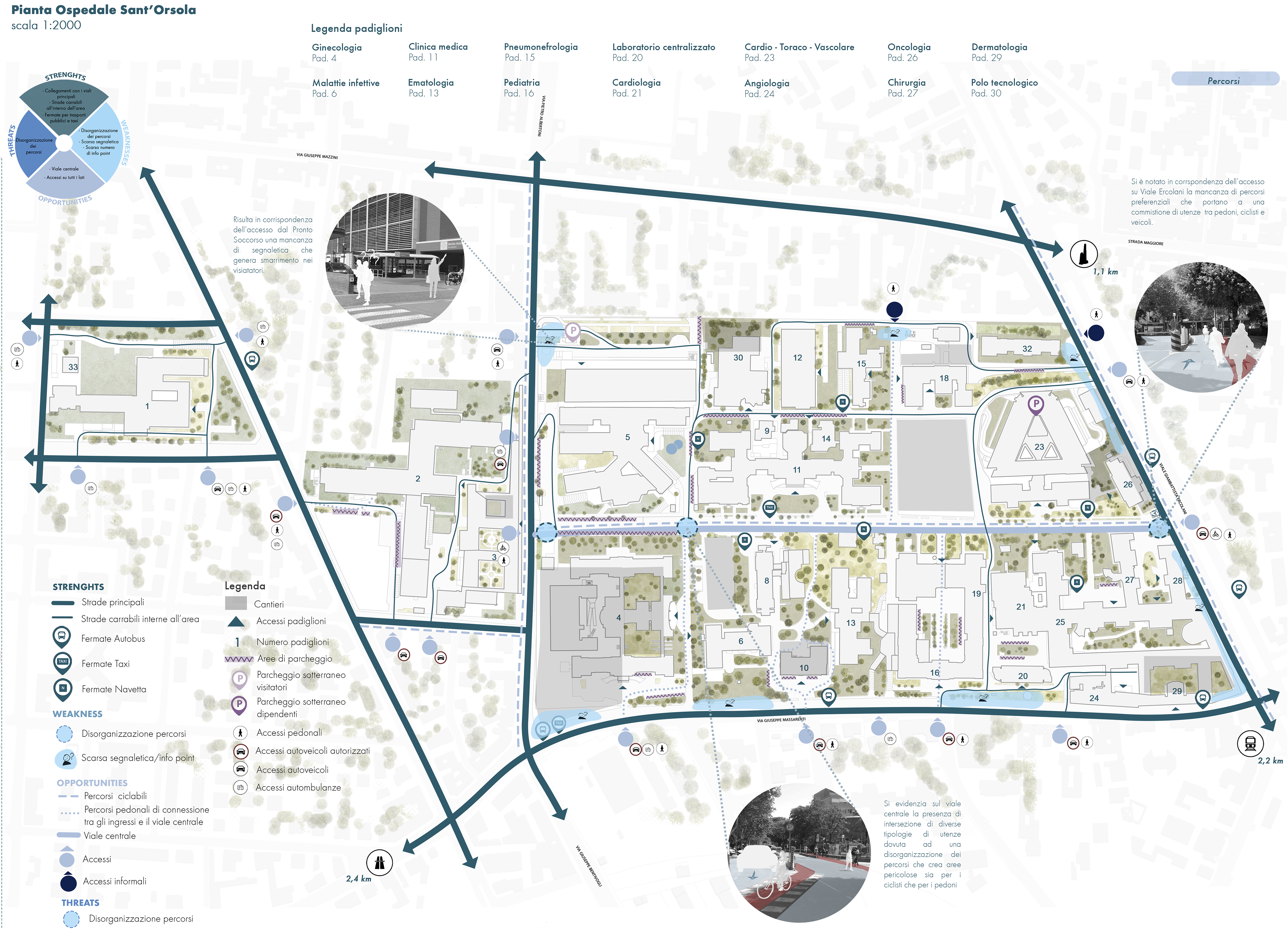
Mobility analysis
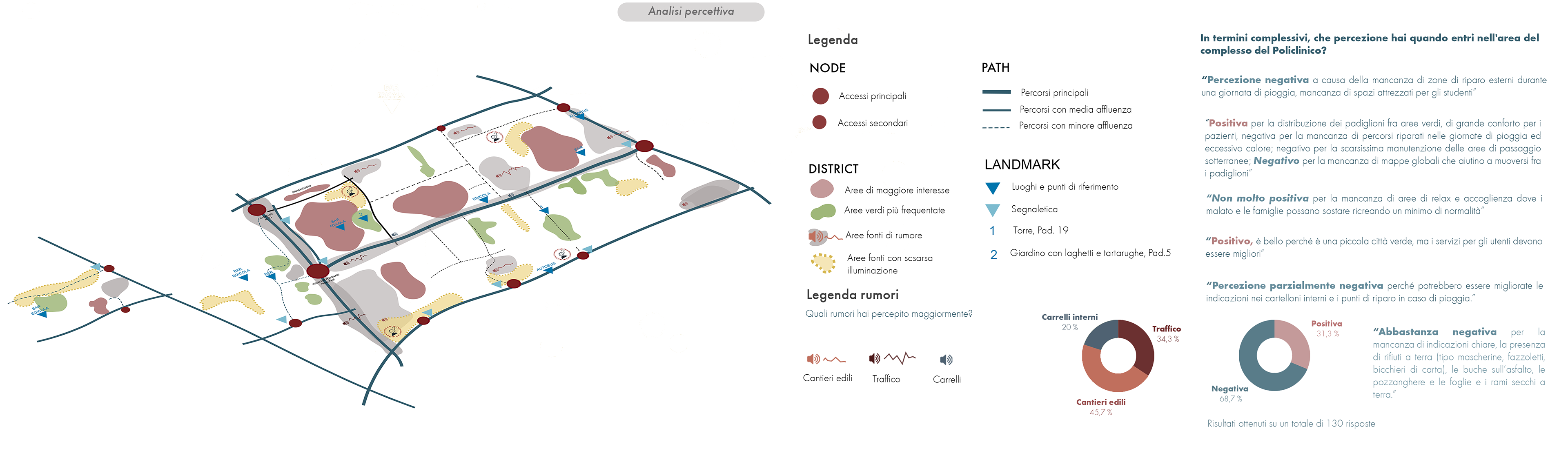
Perceptive analysis
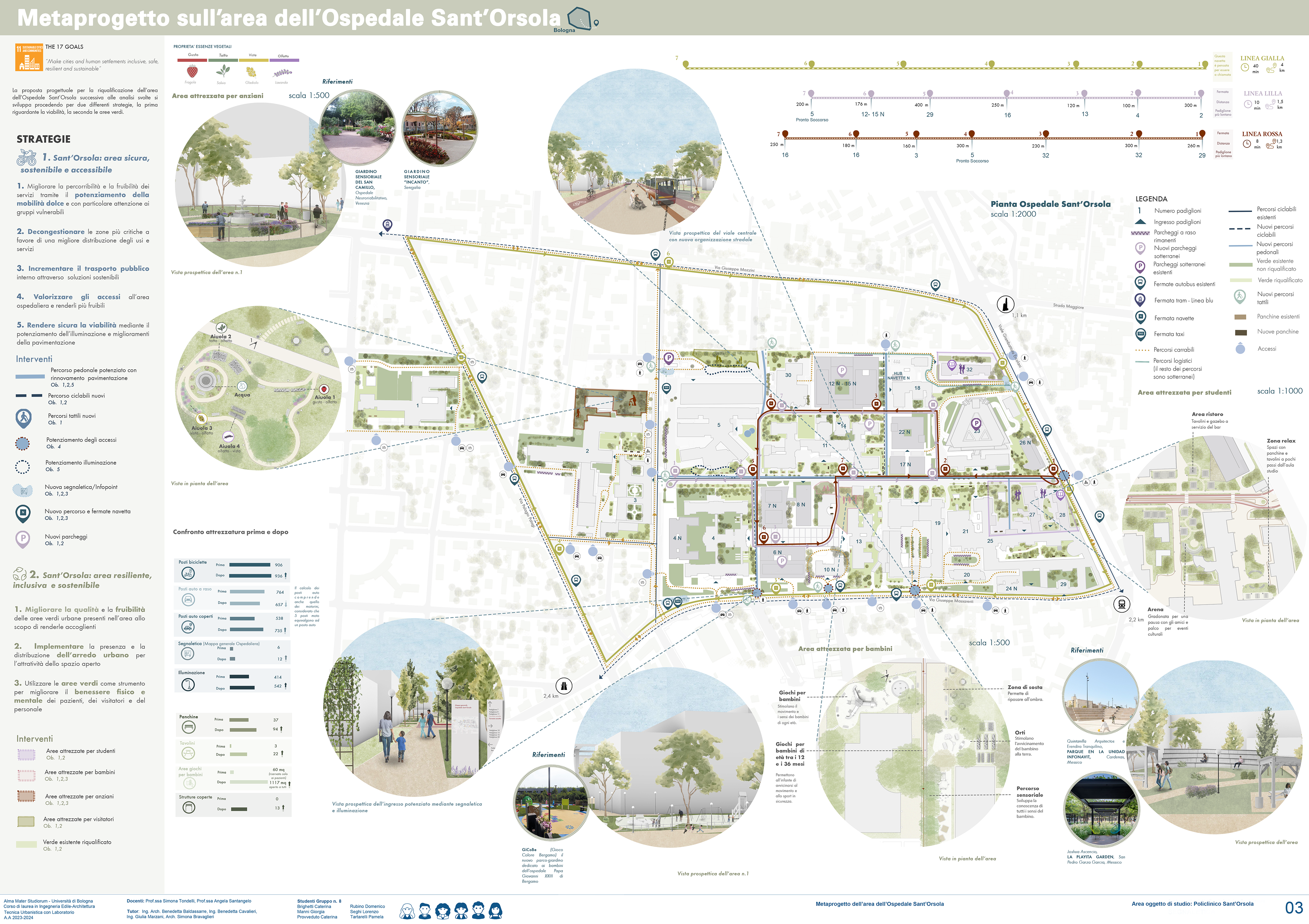
Main Design Strategies
The project is structured around two main strategies, each focused on different yet complementary aspects of the area’s redevelopment. The first strategy targets the mobility and accessibility of the hospital, while the second concerns the redevelopment of green areas and related infrastructures. These two strategic lines were conceived to effectively address identified issues and to create a safer, more sustainable, and welcoming space, where the community can feel comfortable and valued, and interact with the environment in a more effective and productive way. This dual approach ensures that all aspects of hospital life are considered—from movement and transport to the use of outdoor spaces—allowing for harmonious integration between the various functions and user needs.
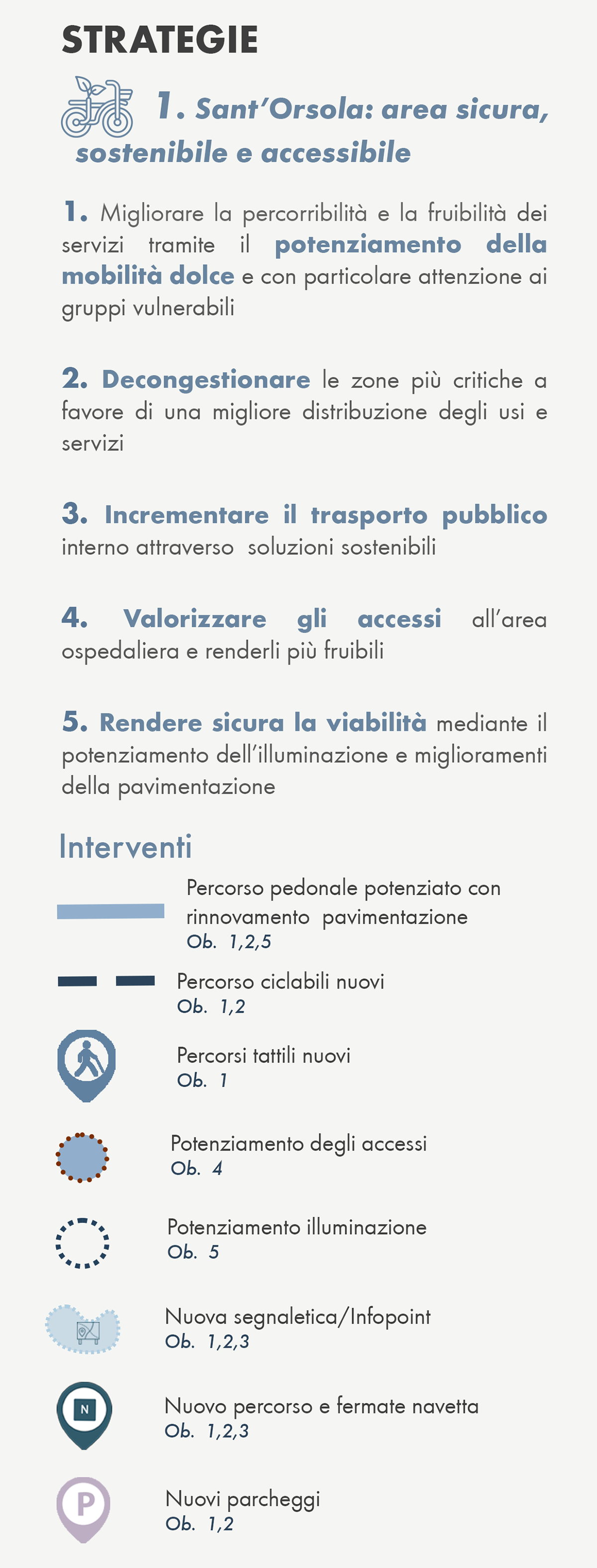
First strategy
Sant’Orsola: a safe, sustainable, and accessible area
The first strategy aims to improve the walkability of the hospital area and the usability of the services offered, with particular attention to vulnerable groups such as people with disabilities, the elderly, and children. One of the main goals is to enhance soft mobility, namely pedestrian and bicycle travel, through the creation of safer, more comfortable, and more accessible paths. Congestion in the most critical areas will also be reduced by redistributing space and optimizing traffic flows, ensuring more efficient service management and greater overall safety.
Another key aspect of the strategy involves expanding public transport within the hospital, with the introduction of electric shuttles that will provide more efficient and sustainable internal mobility, helping to reduce traffic and air pollution. The hospital's main entrances will also be improved, making them more recognizable and user-friendly, thanks to enhanced and clearer signage. This intervention will not only improve user orientation but will also facilitate the flow of people in and out, making the entire experience smoother.
Specific interventions will also focus on improving road infrastructure by enhancing public lighting and upgrading pavements with more permeable and sound-absorbing materials, with the goal of reducing the risk of accidents and making the hospital a place where people can move around comfortably and safely.
Sant’Orsola: a resilient, inclusive, and sustainable area
The second strategy focuses on the redevelopment and usability of the hospital’s green spaces. The goal is to create more welcoming, comfortable, and functional outdoor areas, thereby improving the physical and psychological well-being of patients, visitors, and staff. This strategy includes the installation of new urban furniture such as benches, tables, and covered areas to encourage outdoor rest and relaxation. Urban furnishings will be more widely distributed to make these spaces accessible to a broader segment of the population.
In addition, the green areas will be enhanced with pedestrian paths that encourage socialization, movement, and relaxation, creating an environment that stimulates social interaction and collective well-being. The ultimate aim is to ensure that these green areas are not only designed to meet the immediate needs of users but are also capable of adapting and remaining functional in the long term, despite future challenges.
Resilience is embodied in these areas' ability to adapt to changes and the evolving needs of the hospital community while remaining safe, welcoming, and usable. Design choices such as using native and resilient plant species, creating multifunctional spaces, and ensuring inclusivity guarantee that green areas will continue to offer both physical and psychological benefits, even in the face of unforeseen events or changing environmental conditions. In this sense, green areas become a vital element in supporting and promoting long-term well-being for hospital users, effectively and sustainably responding to future challenges.
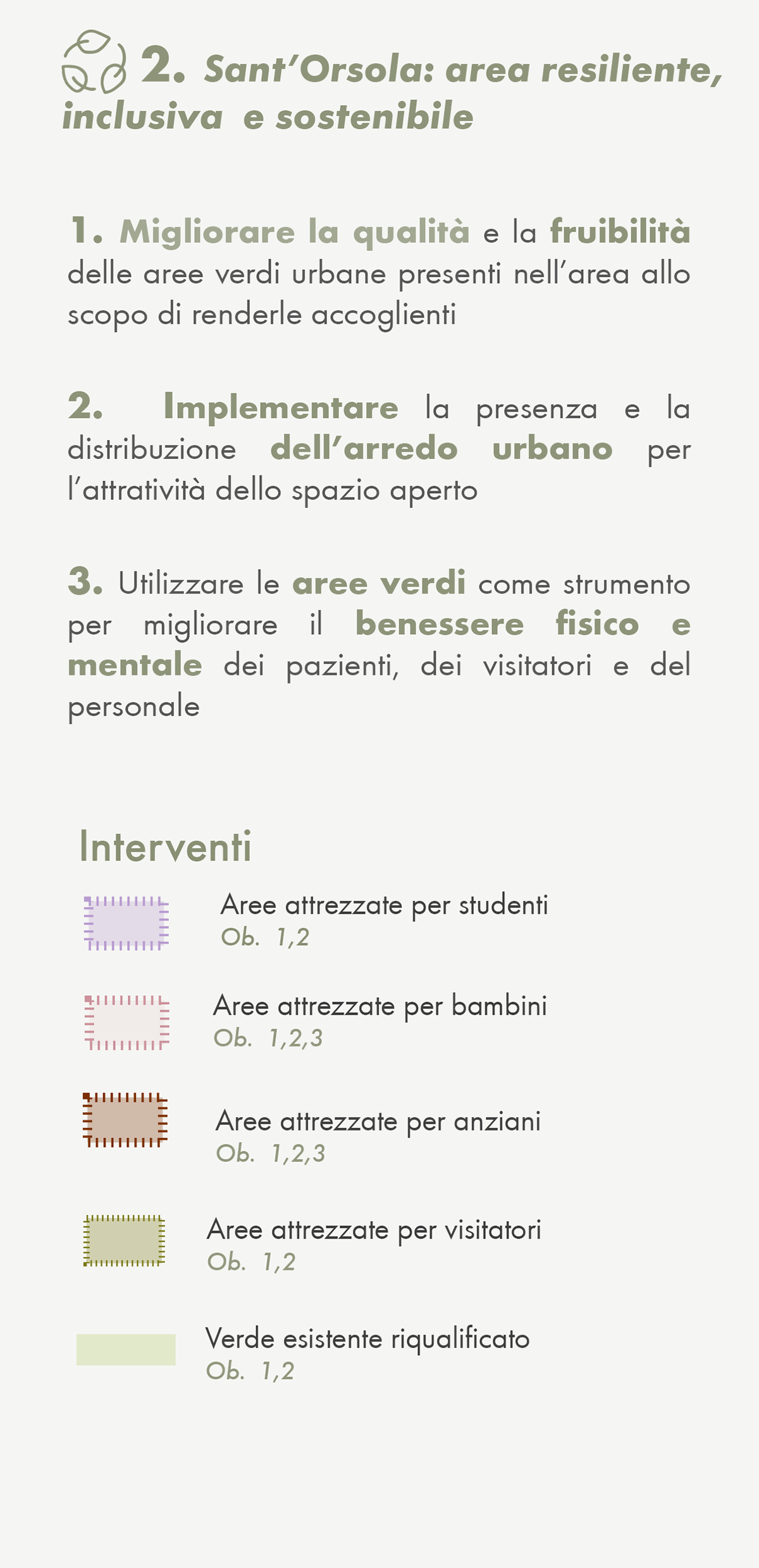
Second strategy
Design Interventions
These identified strategies have been translated into concrete design proposals, such as the pedestrianization of the hospital’s main avenue, which will be reserved exclusively for pedestrian and bicycle traffic. This is part of a broader plan to reorganize internal circulation, aimed at ensuring greater pedestrian safety while reducing air pollution within the hospital grounds. Pedestrianization will also extend to some secondary roads, better connecting various hospital entrances and redistributing pedestrian flows to reduce congestion and improve overall user experience.
These solutions aim to transform the Policlinico area into a safer, more inclusive, and more sustainable place—capable of effectively meeting the needs of its users and significantly contributing to the well-being of the local community. The goal is to make the hospital not only a place of care but also a point of reference for the entire surrounding area, where everyone can benefit from the improvements and feel part of a vibrant community.
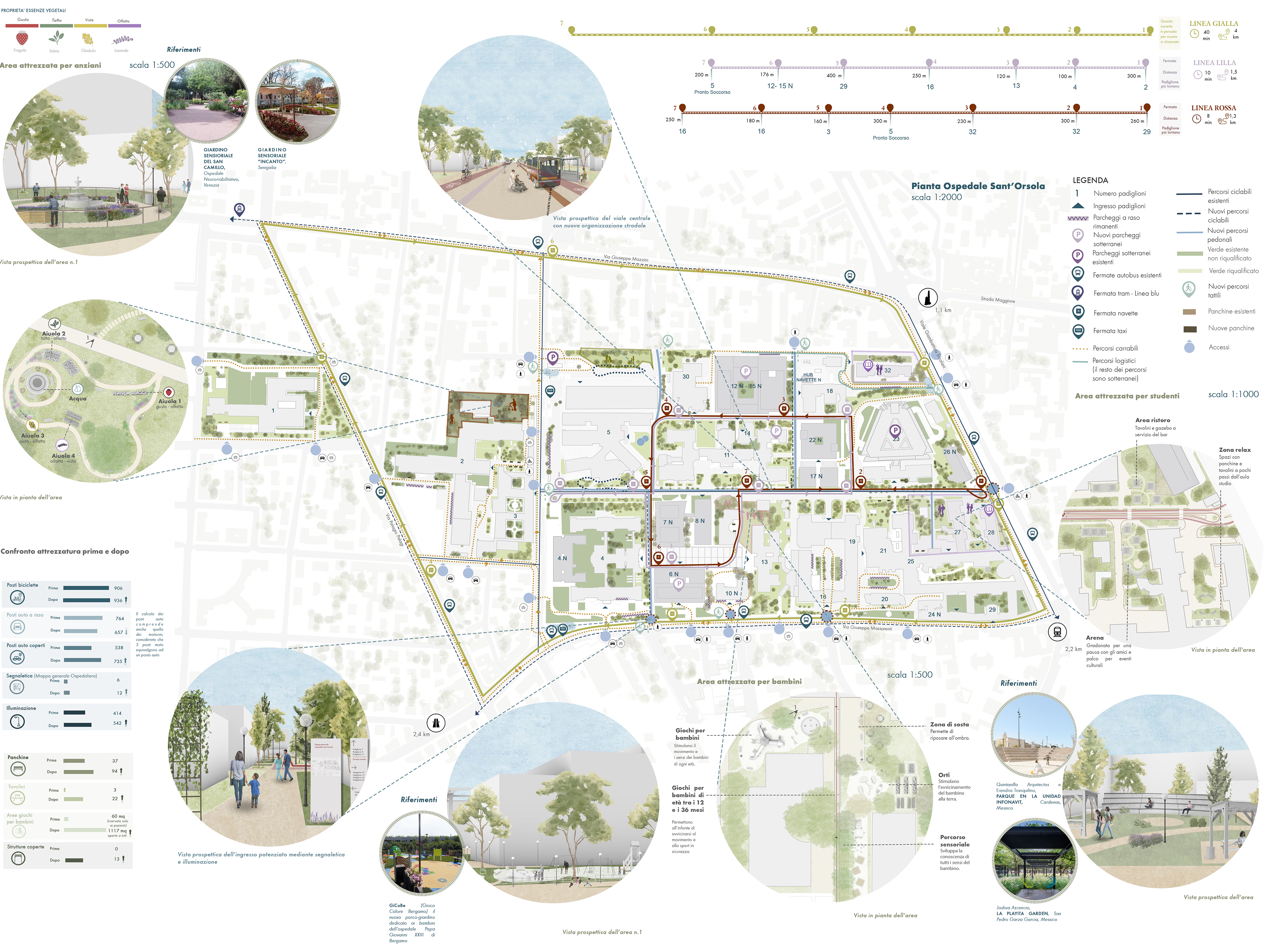
Design Interventions
To significantly expand and improve public transport, the project places particular emphasis on the needs of vulnerable individuals. This includes pregnant women, children, people with disabilities, and the elderly, who often face greater difficulties in moving around and accessing hospital services. Recognizing and understanding these needs is essential to ensure fair and inclusive mobility for all.
To this end, three new Geco electric shuttle lines by Esagono Electric Vehicles will be introduced, offering efficient and sustainable service to facilitate travel and improve accessibility. These compact shuttles, with a maximum width of 1.2 meters, are highly maneuverable and suitable for navigating narrow paths and busy hospital routes.
The core idea is to make movement within and around the hospital complex as smooth as possible, particularly for those facing physical limitations, chronic illnesses, or special needs. Of the three proposed lines, two will serve the internal hospital area, continuously connecting all main pavilions from two opposite access points. These lines will have strategic stops at various buildings and near new underground parking lots, improving accessibility for those arriving by car.
The third line will operate mainly outside the hospital with an on-call service to reach more remote areas like pavilions 1 and 2, which are separated from the main complex and require efficient connection. This is possible thanks to the shuttles' compliance with European N1 standards, allowing them to operate safely on public roads.
Additionally, the shuttles are equipped with platforms to assist wheelchair users, ensuring that no one is excluded from the service. This represents a crucial step toward more equitable mobility and improved quality of life for all.
In parallel with the introduction of the shuttles, improvements to internal hospital signage are also planned. The main entrances will be enhanced with clearer, more visible signage. This new signage will be easy to read and include useful information on shuttle schedules and stops, ensuring users are well-informed about available services. Furthermore, colorful ground markings will guide visitors along shuttle routes, clearly indicating the nearest stops and improving orientation.
This measure is designed to make the user experience smoother and less confusing, especially for those who may struggle to move independently or who are visiting for the first time. Interactive maps and mobile apps may also be implemented to further ease navigation and information access, helping to create a welcoming, easy-to-navigate environment where all users feel supported and safe.
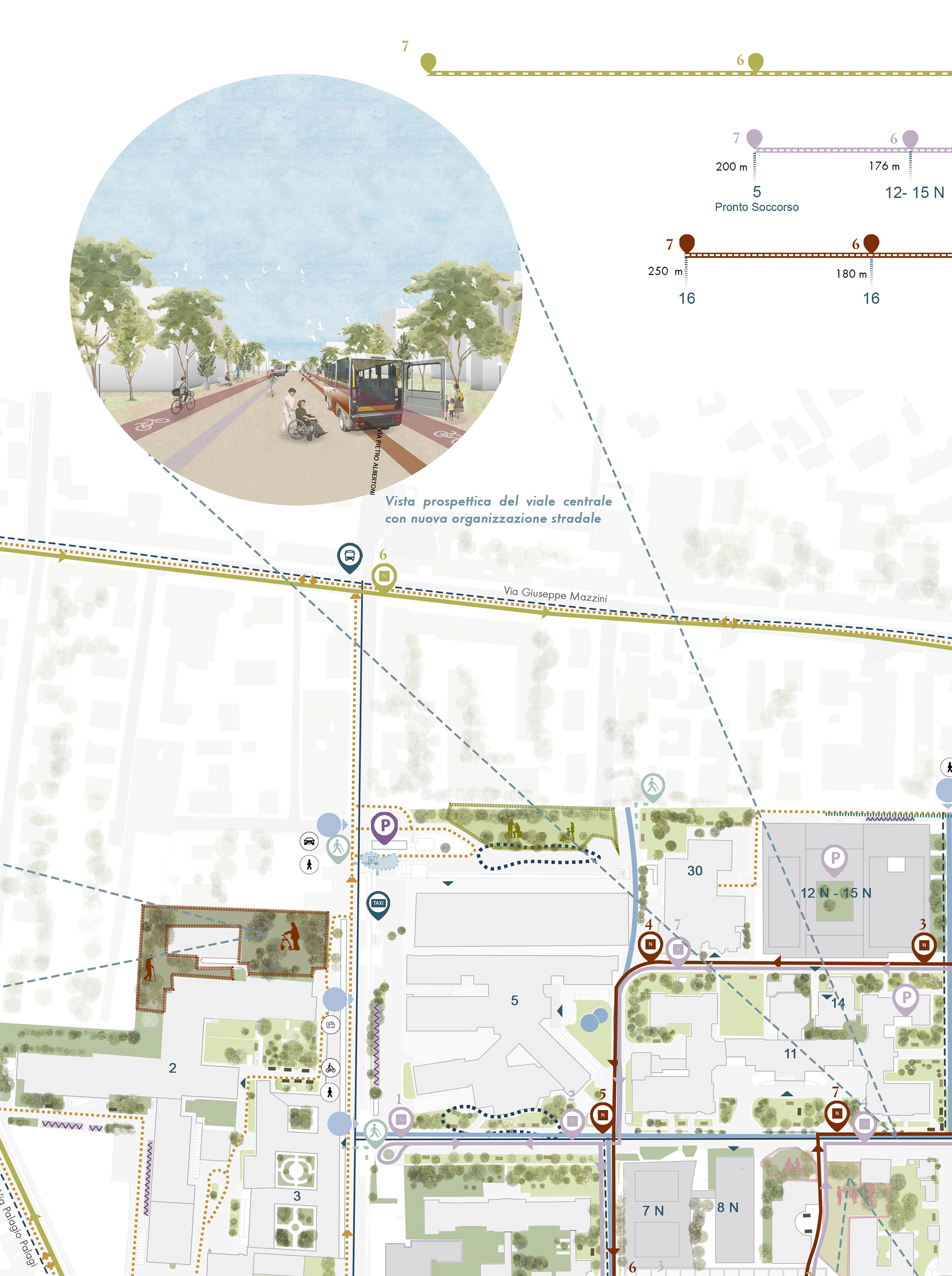
Geco electric shuttle lines
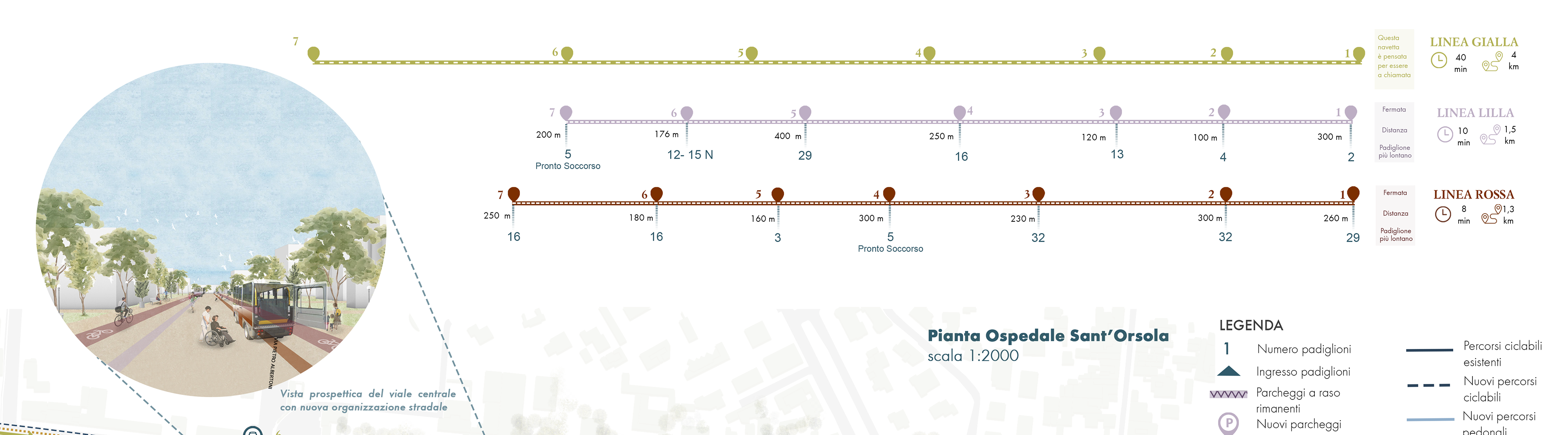
Geco electric shuttle lines
Redevelopment of Green Spaces
Key areas have been identified for equipping and improving green space quality and encouraging wider usage. Responding to deficiencies revealed in preliminary analysis, a youth area will be created near the Prometeo Study Hall. This zone will feature benches, tables for relaxation, and gazebo-covered spaces in continuity with the nearby café.
User surveys indicated a lack of covered areas for shelter from rain or sun, and an almost complete absence of tables, limiting the usability of green areas. To address these issues, a small amphitheater-style arena will be added—a multipurpose space for relaxing breaks with friends or hosting cultural and social events that engage the community, creating opportunities for social interaction and experience sharing.
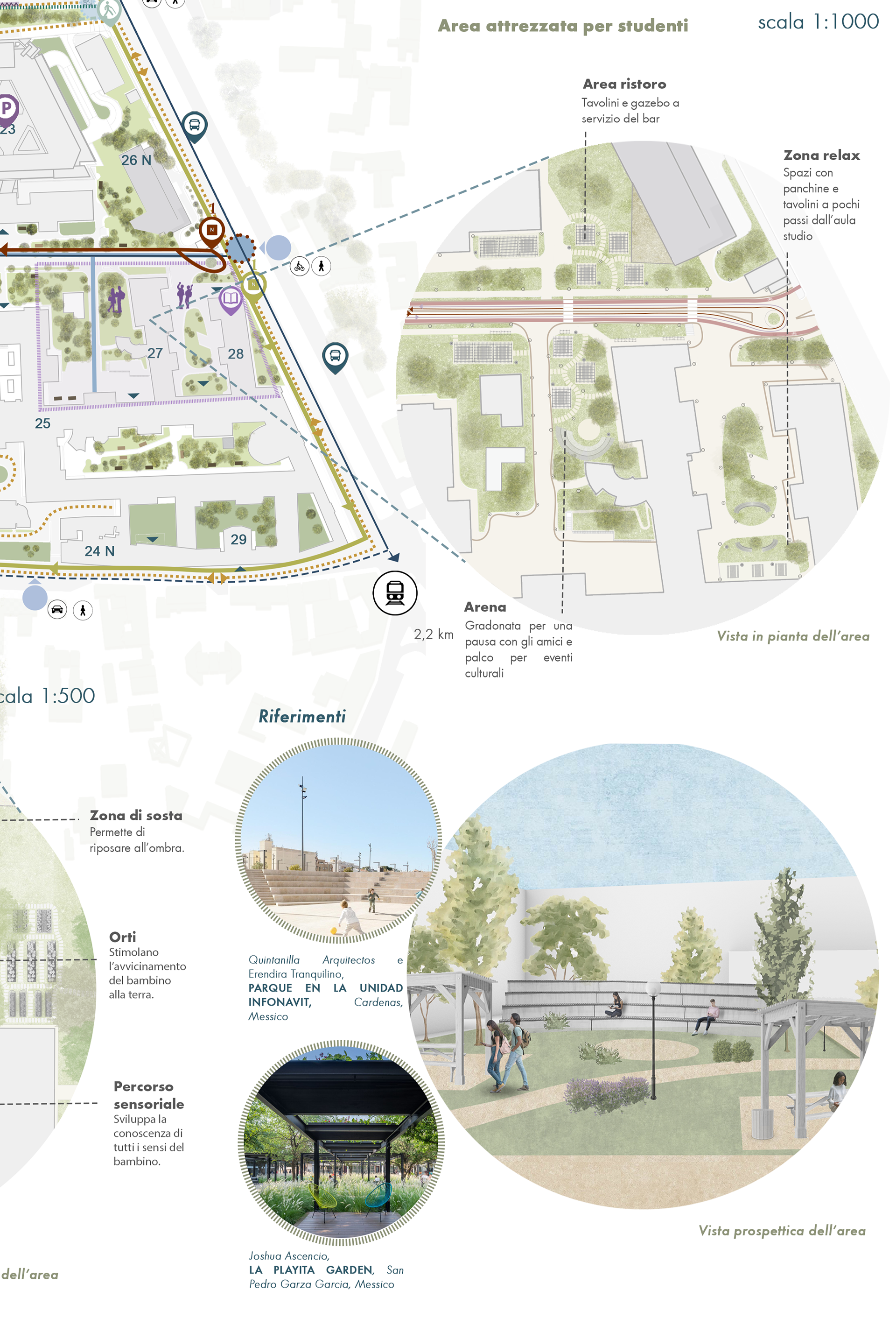
Youth area
Another focus area is the children’s space. Analysis revealed that existing play areas were limited to pediatric patients, excluding children from the surrounding community. To address this, the play area will be opened up and expanded, with zones dedicated to fun and the development of mobility and creativity in children of all ages. It will be complemented by a rest area with shaded tables and benches along the shuttle route for easy access.
A specific section for children aged 12 to 36 months will also be created, featuring games designed to support psychomotor development and introduce early sports activities, ensuring appropriate supervision and safety. Adjacent to this zone, small educational gardens will be established to connect children with nature and plant care, encouraging environmental awareness from an early age and promoting sustainability and respect for nature.
These initiatives will not only enrich the experience of younger users but also help nurture environmentally conscious and responsible future citizens.
A notable proposal is the creation of a multisensory path near the entrance to Pavilion 13. Designed to stimulate the five senses, this path combines visual, auditory, tactile, and olfactory elements to provide both an educational and playful experience. This multisensory path turns the area for children into not just a place of fun, but also a space for learning through play. It encourages exploration and creative interaction with the environment, supporting cognitive and sensory development in a safe and stimulating setting.
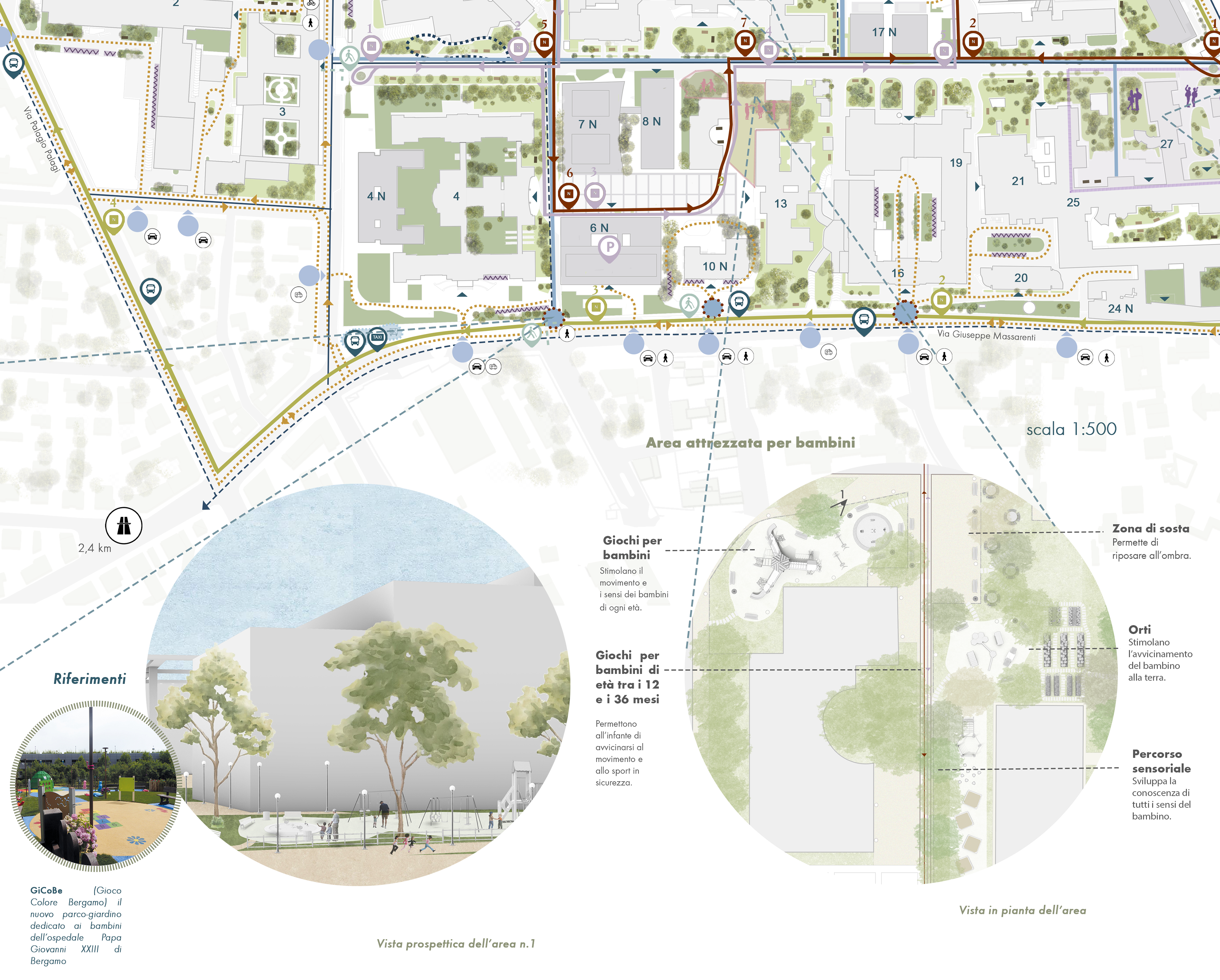
Children area
The final area of focus is for elderly users, located near Pavilion 2. This space will feature a sensory path designed to stimulate perception through the use of aromatic plants, the relaxing sound of water, and the shade of existing tall vegetation. The path will follow a circular layout with clearly defined start and end points, and include a handrail to aid orientation and ensure safety.
Benches and shaded areas will be added, along with pre-existing spaces suitable for outdoor activities like exercise or relaxation, promoting a healthy and active lifestyle for the elderly. The aim is to create a tranquil, restorative place that also engages the senses and encourages social interaction. Workshops and social activities will be organized to foster connections among elderly users, creating a sense of community and mutual support essential for improving quality of life.
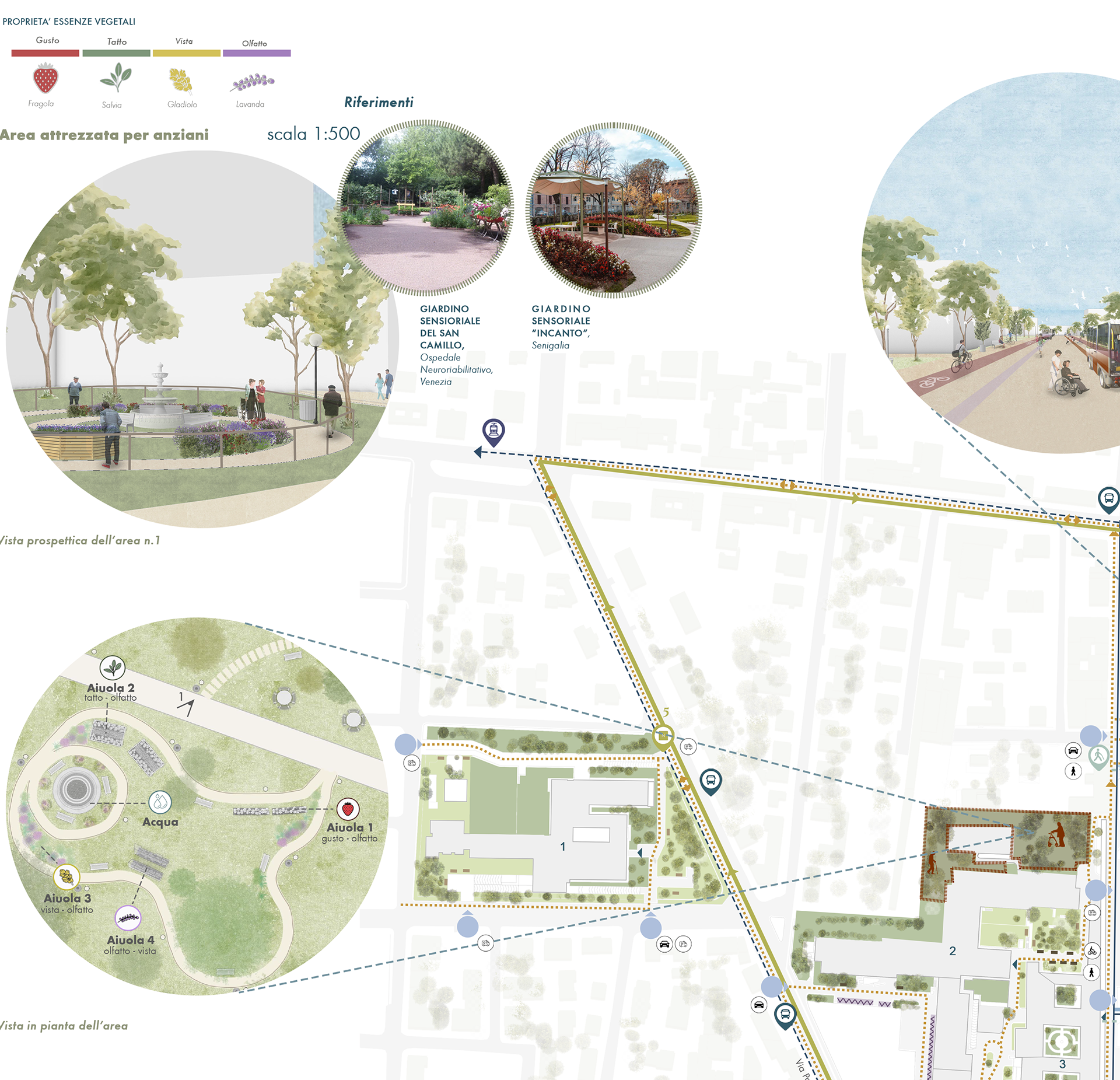
Elderly users area
Overall, the project aims to achieve its objectives through targeted interventions addressing critical issues identified in the hospital area analysis. These actions seek to improve the perception and livability of the space, making it more accessible, welcoming, and functional for all users—patients and visitors alike.
Sustainability, social inclusion, and quality of life are central to every design phase, with the goal of creating a hospital environment that truly meets the needs of all who use it. Each intervention is not only designed to enhance the aesthetics and functionality of the spaces but also to promote a culture of respect, inclusivity, and attention to individual well-being. In this way, the hospital becomes not just a place of care, but a vital community hub where the health and well-being of all citizens are prioritized.
Project boards list:
Board 1: Summary of Analyses
Board 2: Concept Design Board