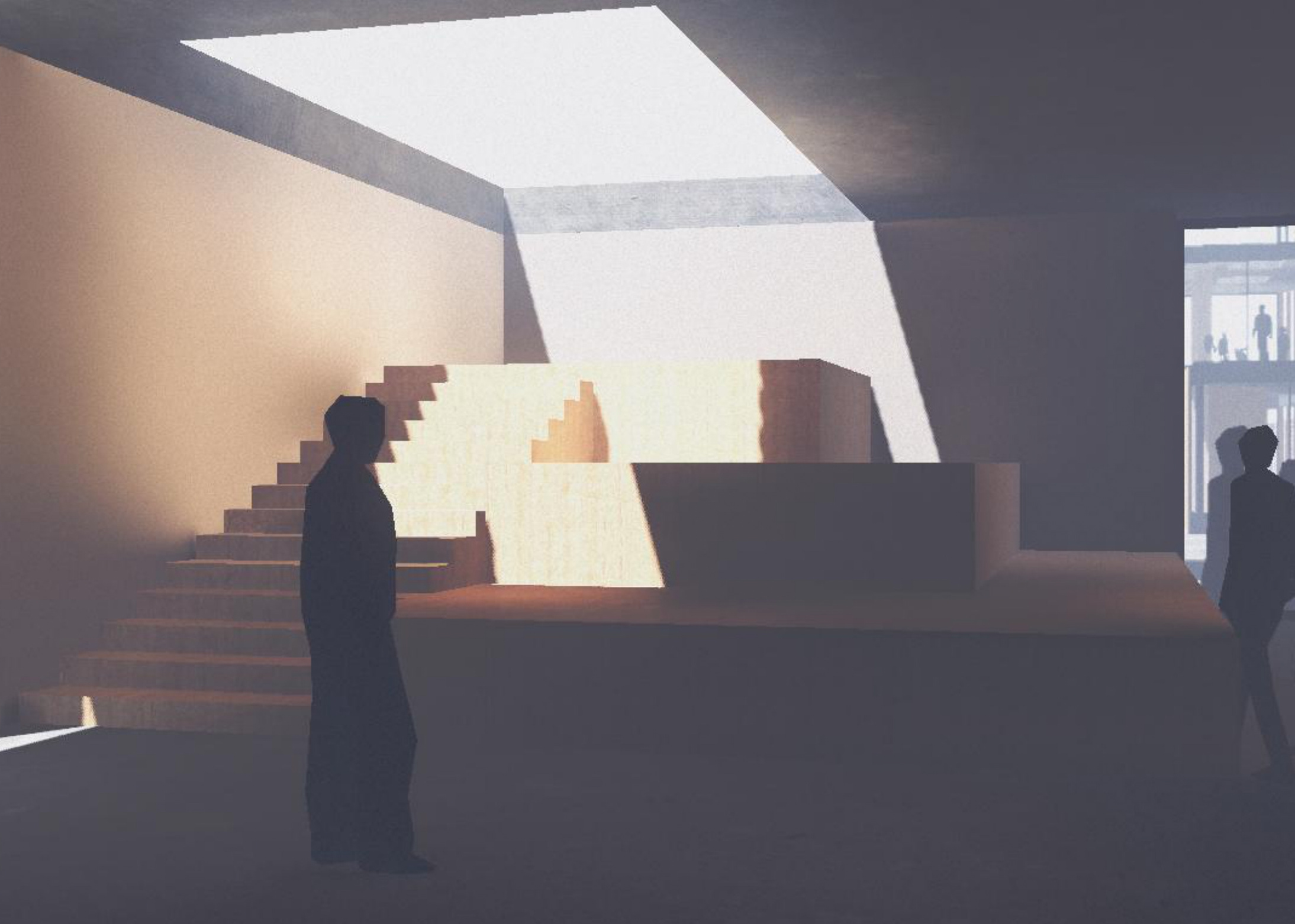
Project Team: Brighetti Caterina, Manni Giorgia
Location: Bolognina, Bologna (IT).
Year: febraury - june 2024
Location and Context
The project is located in the Bologna district of Bolognina, a residential area just outside the historic city walls. It boasts several positive characteristics, including its proximity to the Bologna Central Station. However, it also has its drawbacks, particularly the presence of industrial zones and the now dilapidated and abandoned former Sani Barracks.
The project is located in the Bologna district of Bolognina, a residential area just outside the historic city walls. It boasts several positive characteristics, including its proximity to the Bologna Central Station. However, it also has its drawbacks, particularly the presence of industrial zones and the now dilapidated and abandoned former Sani Barracks.
Contextual Observations:
- The area is well-served by public transportation, with bike lanes connecting it to the city center.
- It is integrated within a grid of similar residential blocks, creating a quiet, low-traffic area primarily composed of families.
- Public gardens, a school, and a church are located near the block.
- Numerous commercial establishments (such as post offices, mechanics, hairdressers, markets, and cafes) are located within a 1 km radius, serving the area, with some even located within the block itself.
Observations Within the Block:
- The land consumption is quite high due to the demand for car parking spaces, which obviously leaves little room for green areas.
- There are no common spaces, and the block is fragmented by fences, preventing the formation of a sense of community within the area.
- Many buildings do not comply with the 5-meter setback requirement from the perimeter and directly face the sidewalk.
Identified Opportunities:
- Create a bike lane connecting the block to adjacent ones.
- Significantly reduce land consumption to increase green spaces within the block.
- Leverage the proximity to the school by establishing a direct connection, utilizing tactical urbanism principles.
- Strategically and thoughtfully locate services within the block.
Site Plan:
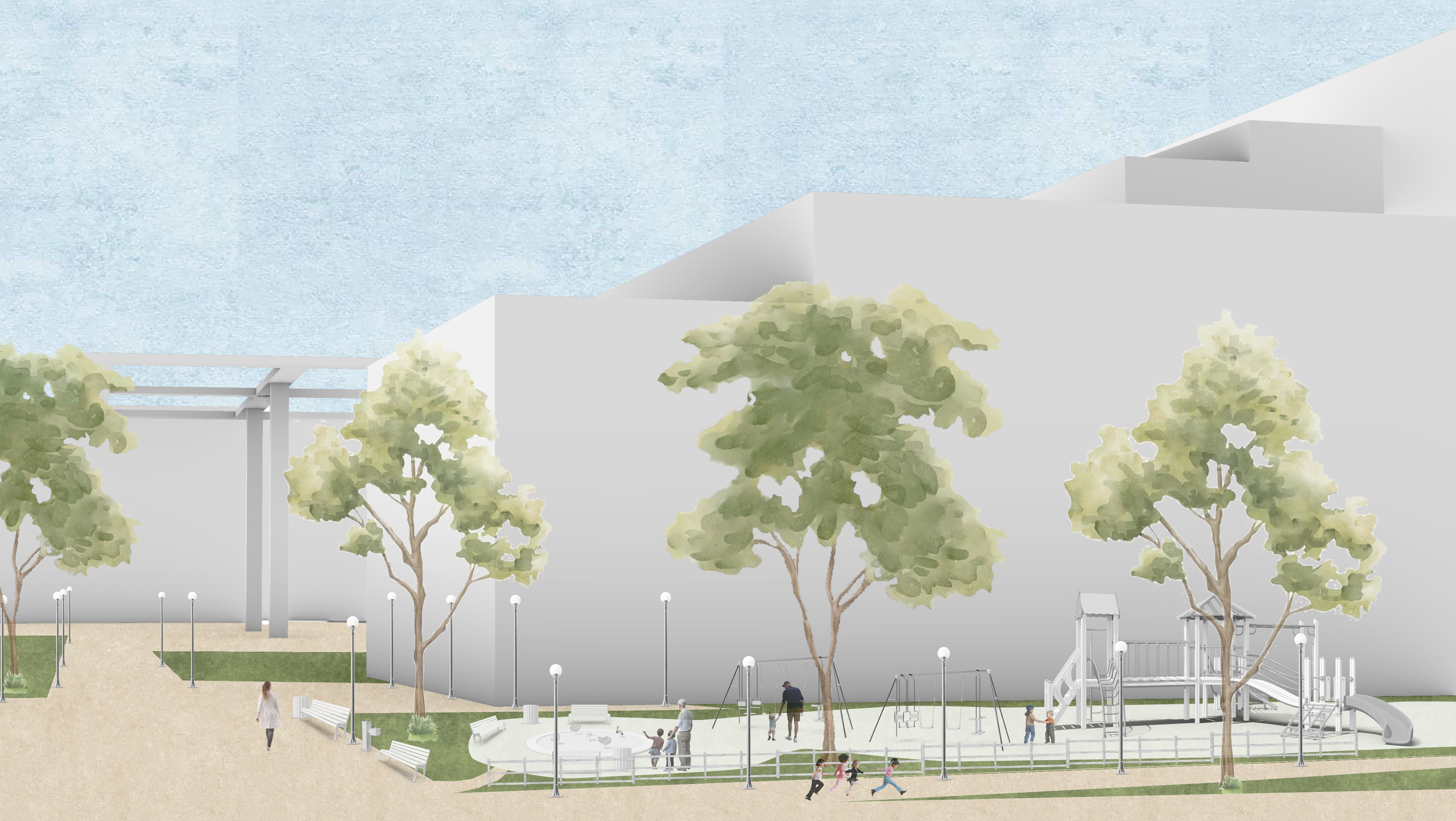
We designed the block as defined in the project context, aiming to optimize the spaces based on modern needs. Specifically, we increased the availability of parking spaces, including those equipped with electric vehicle charging stations and those reserved for disabled individuals. Additionally, we included parking spaces for families with young children, located near the main entrances to the block. It is important to note that the street in front of the school is closed to vehicular traffic, leaving room for parking. The building assigned to us is Block D, located in the southwest corner of the block, overlooking the school.
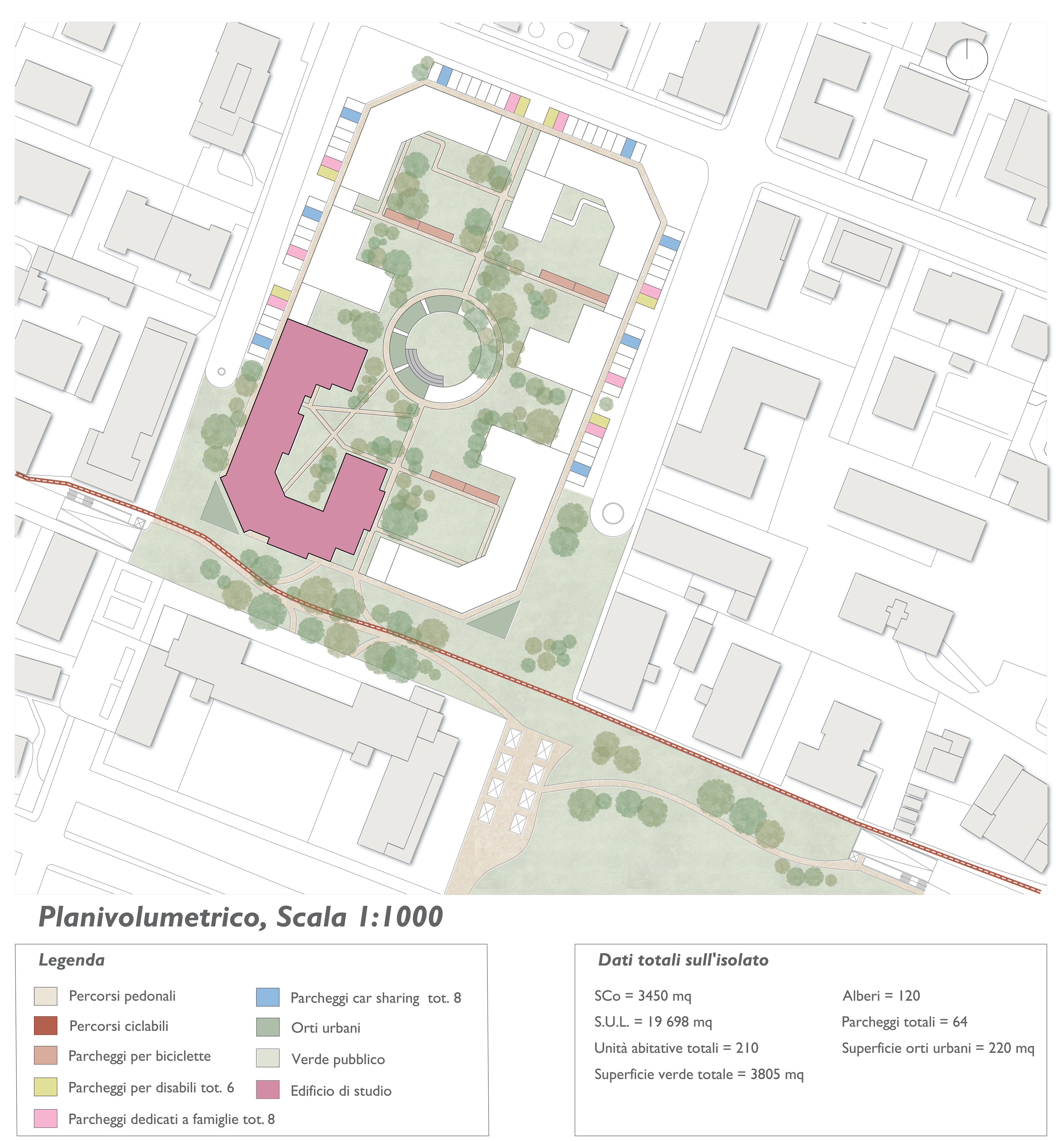
Planivolumetric
Structural Carpentry
The construction technique chosen for the building is XLAM, selected for its high thermal performance and ability to create a solid yet lightweight structure. In the typical floor, the structure consists of 5x5 meter modules of XLAM in the building's two longitudinal wings. In the central diamond, we opted for a steel structure made of tubular columns with a diameter of 244.5 mm and a thickness of 10 mm, with main IPE 240 beams and secondary IPE 120 beams. For the stairwells, we designed the structure to accommodate both the stairwell and the elevator shaft, integrating it into a 25 cm thick shear wall. The foundation is primarily direct, with inverted beams, while in critical areas and near stairwells, a slab foundation is used.
Functional division of the floor plans
Ground Floor Layout:
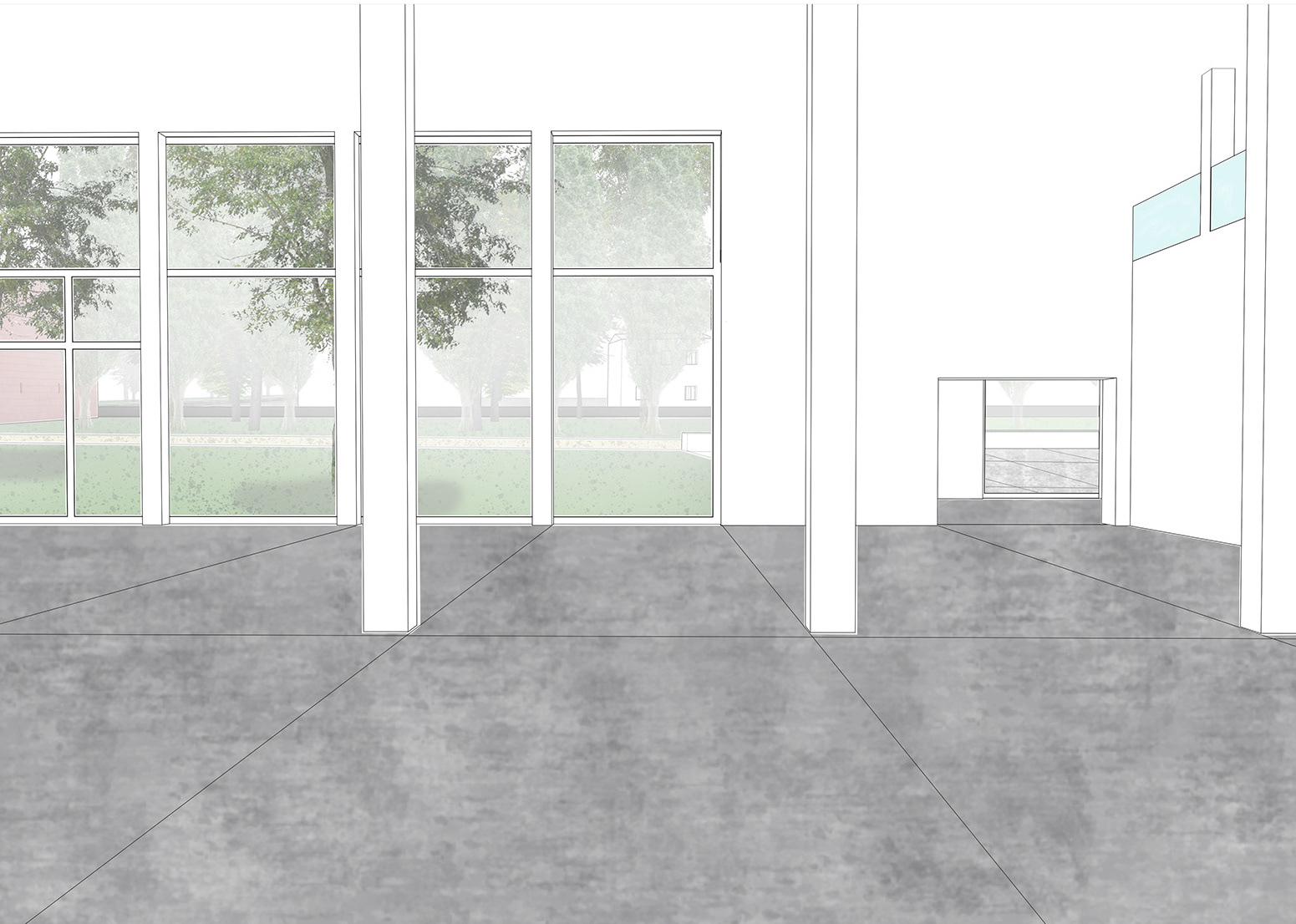
On the ground floor, we designed flexible spaces that can be used as both common classrooms and commercial units, easily interchangeable to suit different needs. We also planned a porticoed, permeable space corresponding to the steel structure, which provides direct access to the inner green area, offering a space for socialization and relaxation for the building’s occupants.
On the ground floor, we designed flexible spaces that can be used as both common classrooms and commercial units, easily interchangeable to suit different needs. We also planned a porticoed, permeable space corresponding to the steel structure, which provides direct access to the inner green area, offering a space for socialization and relaxation for the building’s occupants.
Roof Plan:
We designed a flat roof across the entire building, allowing for the optimal use of space for the installation of photovoltaic panels, contributing to the building’s energy independence.
We designed a flat roof across the entire building, allowing for the optimal use of space for the installation of photovoltaic panels, contributing to the building’s energy independence.
Typical Floor Layout:
The modular system of XLAM allowed us to divide the building into different types of apartments:
The modular system of XLAM allowed us to divide the building into different types of apartments:
- One-bedroom apartments (50 sqm) marked in green;
- Two-bedroom apartments (75 sqm) marked in yellow;
- Three-bedroom apartments (100 sqm) marked in blue.
In total, 45 apartments are planned, divided into 9 one-bedroom apartments, 19 two-bedroom apartments, and 17 three-bedroom apartments, with a theoretical capacity of 160 inhabitants.
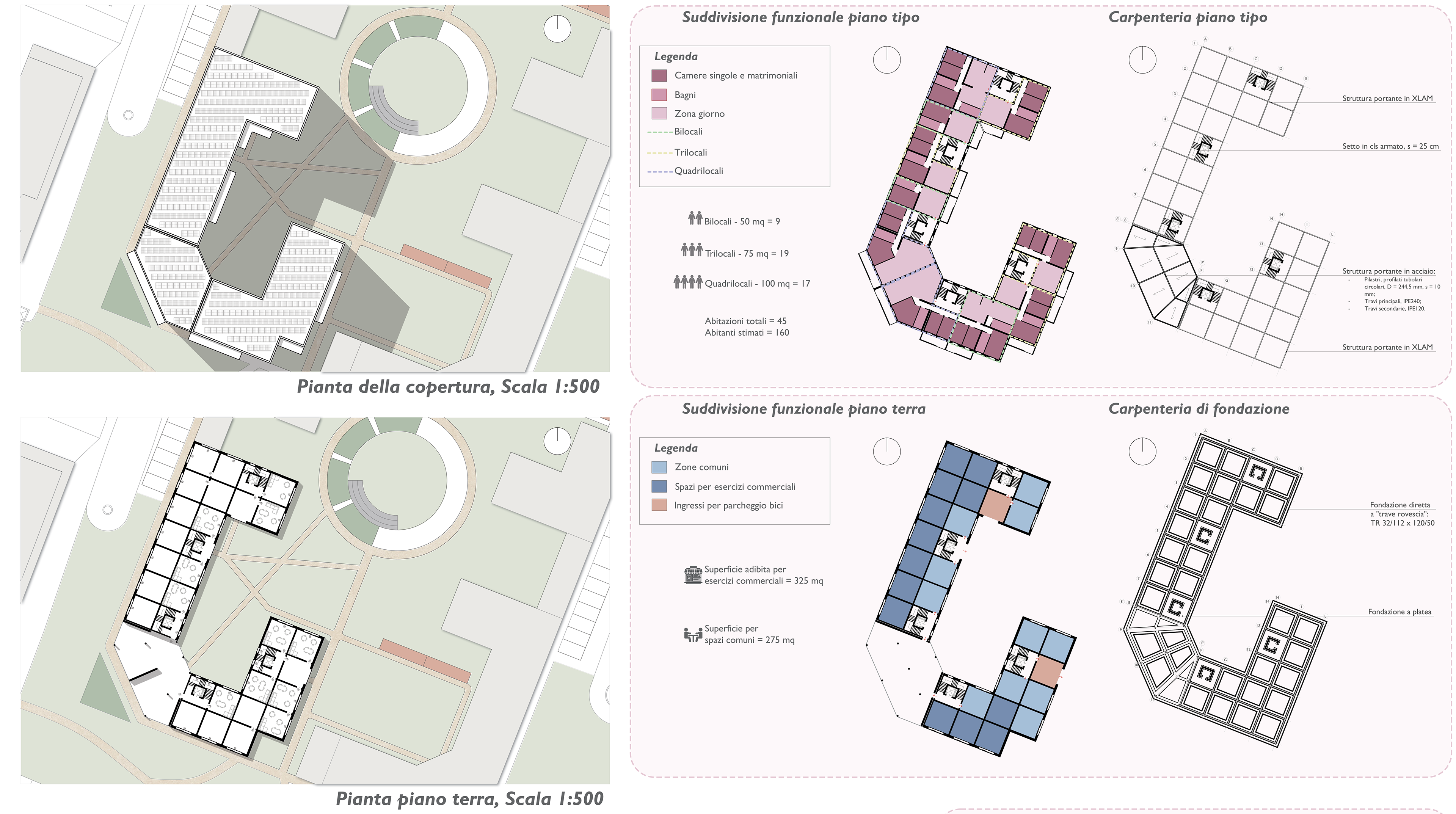
Structural Carpentry Functional division of the floor plans
Layout, Elevations and Sections
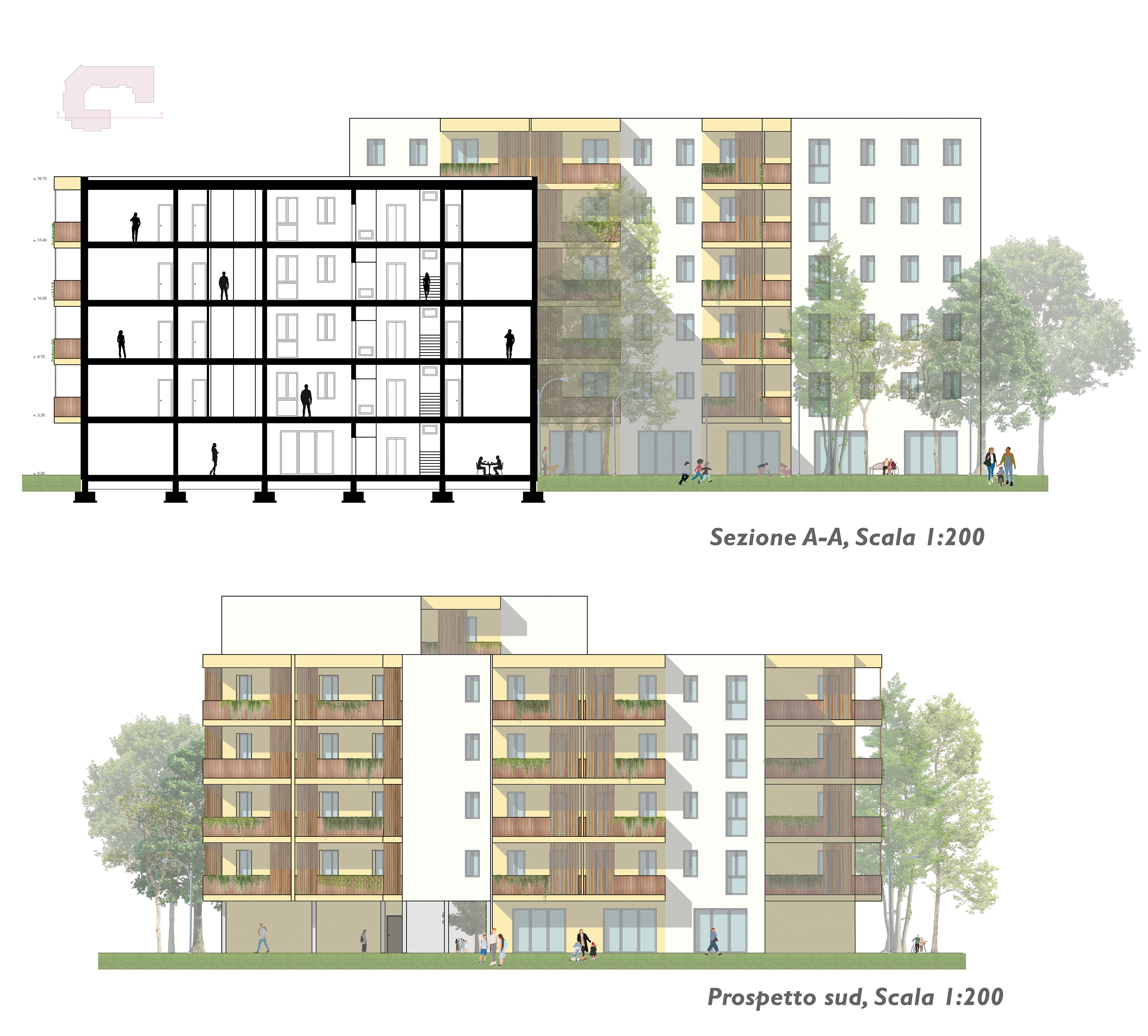
We designed the apartments to optimize both functionality and comfort by clearly separating the day and night areas, ensuring privacy in the more intimate spaces of the home. The apartments were strategically oriented: bedrooms face east and west, while all living areas are oriented to the south and equipped with balconies. Some bedrooms also have balconies for additional comfort. The design of the openings was carefully calculated to comply with regulatory limits on daylight-to-window ratios.
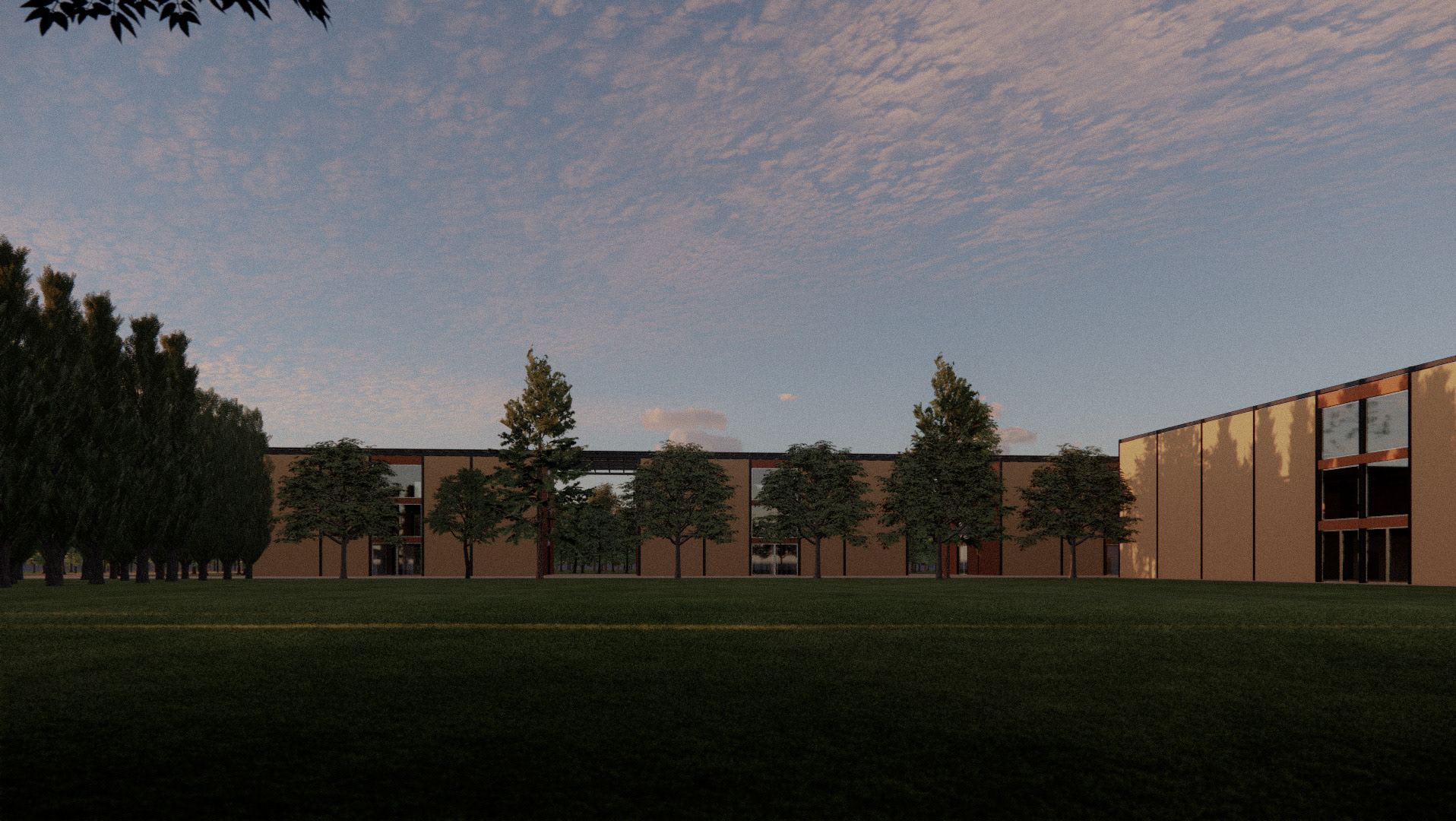
The building has two different heights: six floors in the northern part and five in the southern part. We planned a floor-to-ceiling height of 2.95 meters to maintain consistency between the XLAM structure and the steel structure, with the possibility of adding a false ceiling if needed. For the aesthetic aspect, we decided to add color to the elevations, specifically using a yellow finish on the walls corresponding to the balconies, creating an alternating effect across all elevations. Additionally, we chose a self-cleaning, photocatalytic, and siloxanic paint for both the white and yellow walls (color B109).
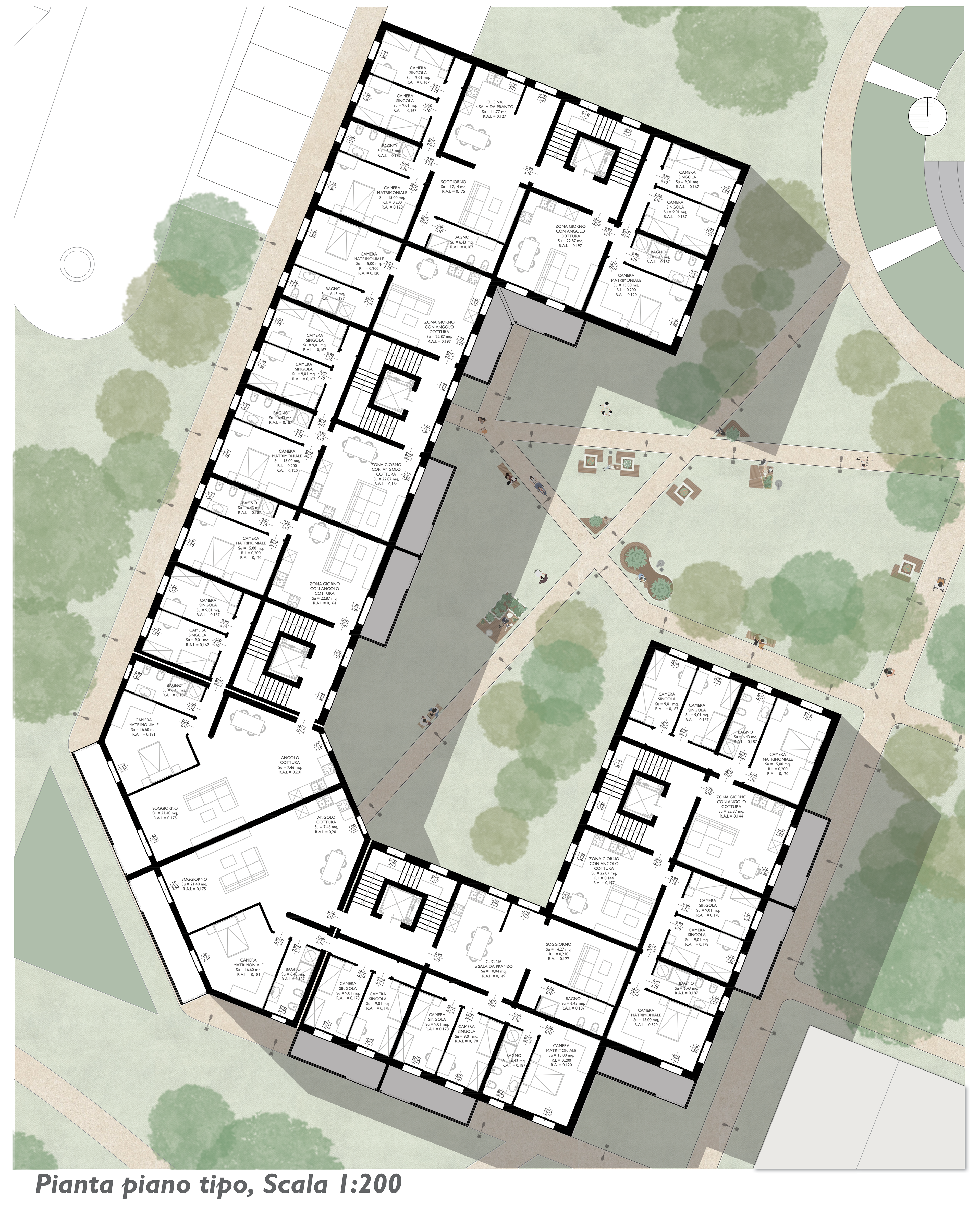
Floor plan
Elevations
One Click LCA results and Photovoltaic Panels
General Data - Energy Consumption - Photovoltaic Panels:
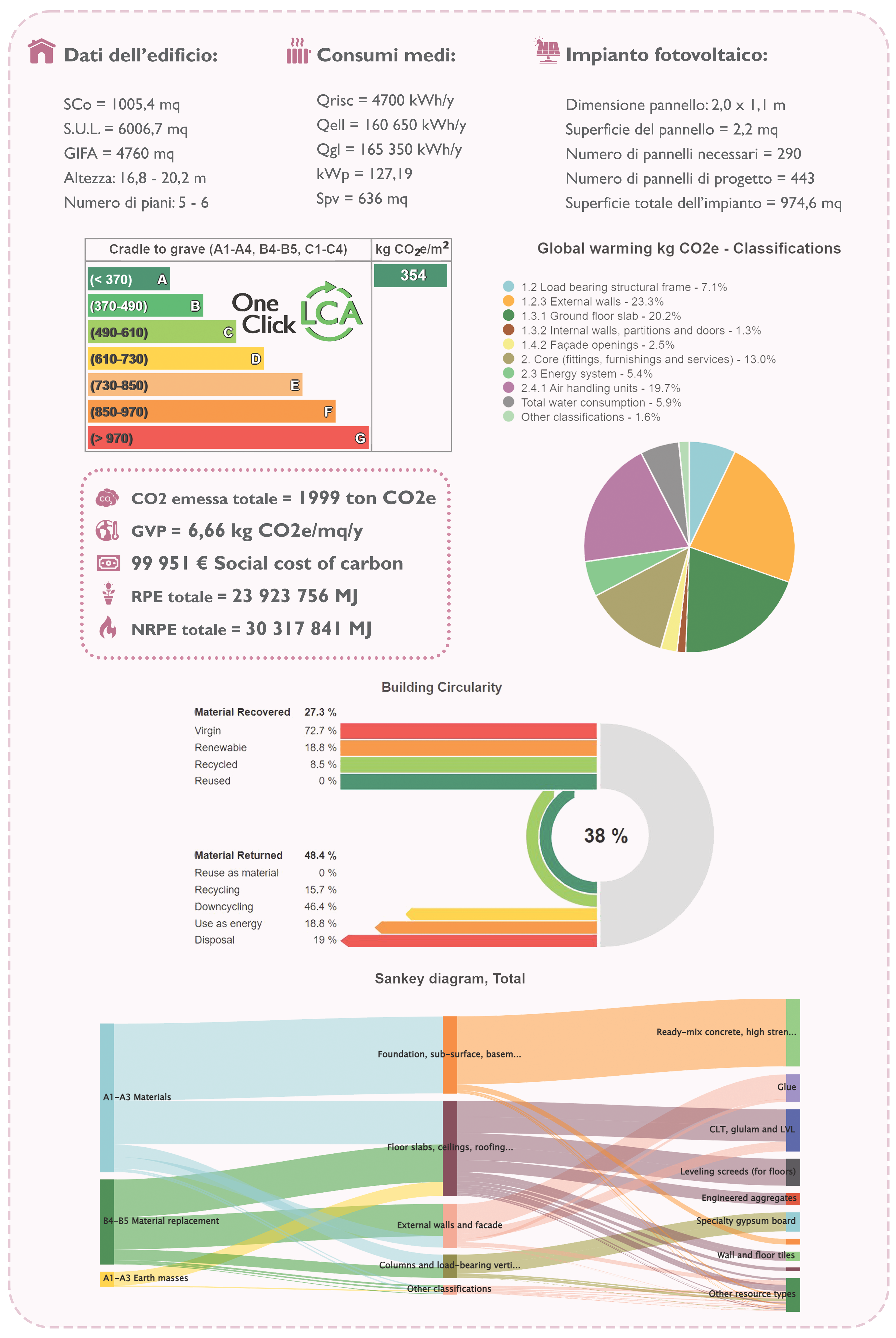
We performed a calculation of the building's average energy consumption , which allowed us to determine the surface area of photovoltaic panels needed to make the building energy-independent. Each panel measures 1.1x2 m, covering an area of 2.2 sqm, and 290 panels are required. However, due to the available surface area, we decided to install a higher number of panels, bringing the total to 443, for a total system area of 974.6 sqm. Using OneClick LCA and Edilclima software, we analyzed the building's package compositions and achieved an energy class A for the building, with a significant reduction in CO2 emissions, amounting to 1999 tons. Furthermore, the Building Circularity check showed that 38% of the materials used in the project have circularity, both in terms of material use and end-of-life management.
Structural Packages and Materials:
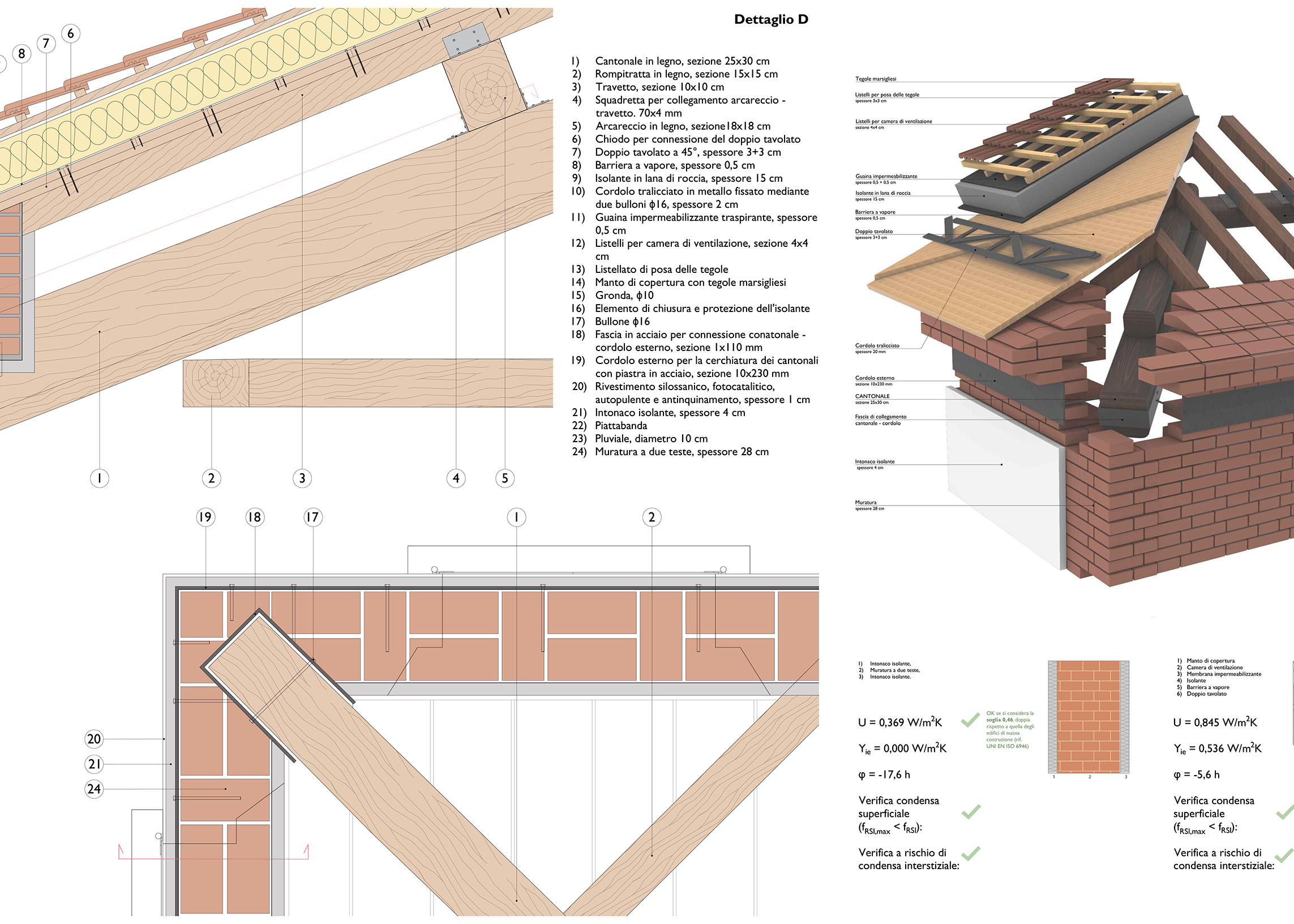
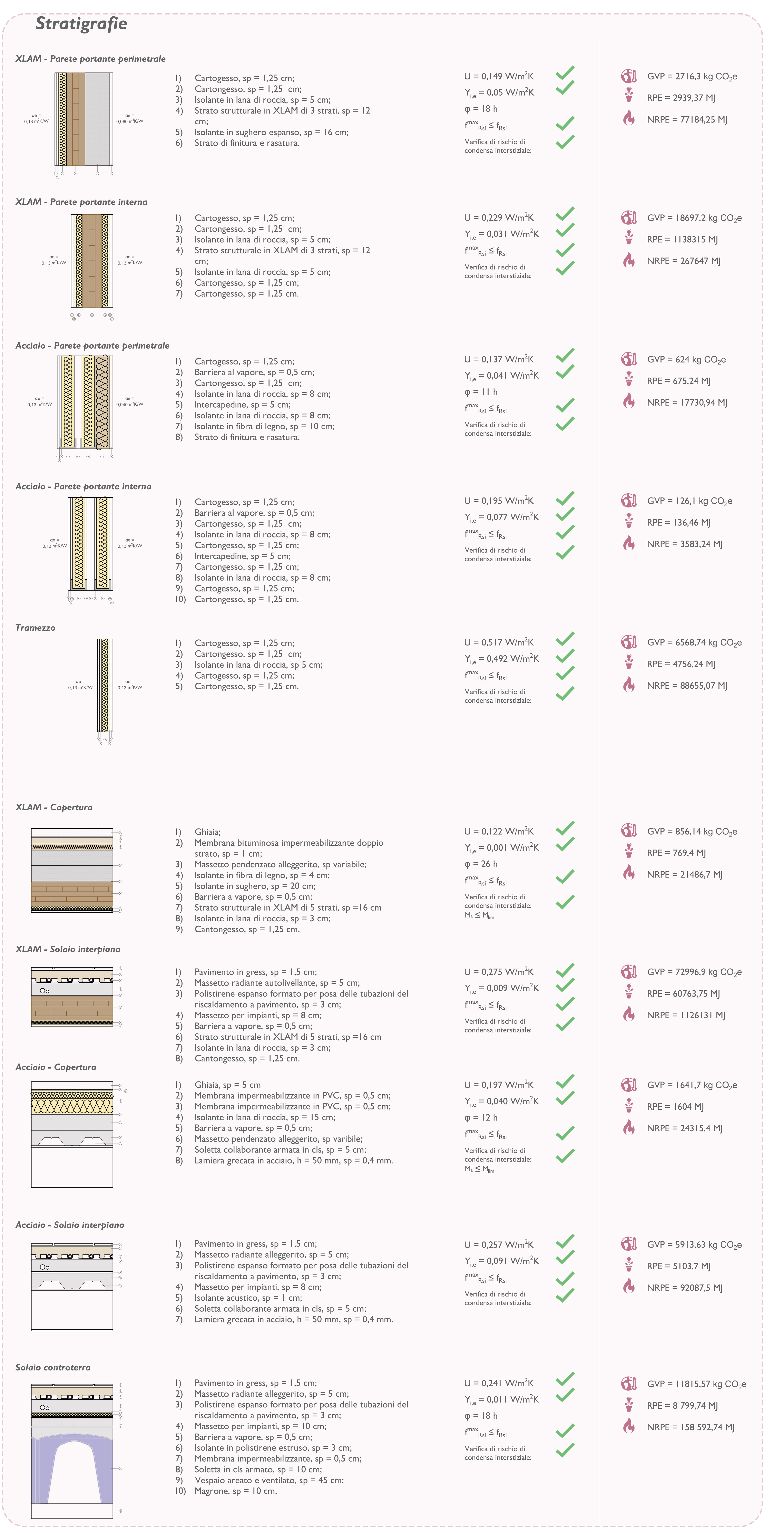
For the structural XLAM elements, we chose a 12 cm thickness for the walls, composed of three layers, and a 16 cm thickness for the ceiling, made up of five XLAM layers. We prioritized the use of organic and mineral insulators, such as expanded cork, which works efficiently with wood, as well as rock wool and wood fiber for the steel structure. Additionally, for the heating and cooling system, we incorporated a radiant layer in the floor packages, supported by heat pump systems. We conducted checks for thermal transmittance, periodic thermal transmittance, phase shift, and temperature factors to ensure compliance with the relevant standards.
Thermal Transmittance Parameters:
Thermal transmittance of opaque vertical surfaces to the outside: U ≤ 0.26;
Thermal transmittance of inclined roof surfaces to the outside: U ≤ 0.22;
Thermal transmittance of horizontal opaque surfaces: U ≥ 0.26;
Thermal transmittance of partition elements between units: U ≤ 0.8.
Structural Packages and Materials
Project boards list:
Board 1: Summary of analyses and existing condition of the block
Board 2: Design Board and analyses of the desing condition of the block